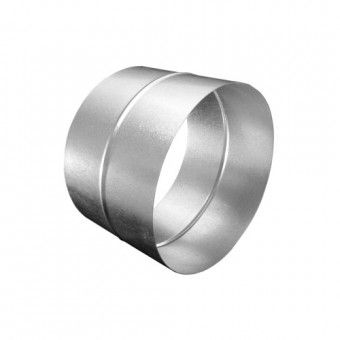
MF 150 Coupler — Ø150 mm Connector for Ventilation Ducting
What it does
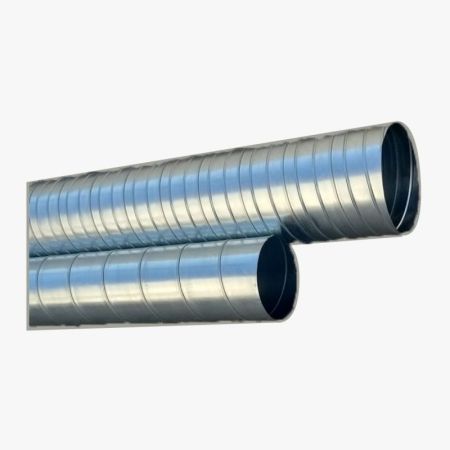
The MF 150 coupler is the part that joins two ventilation fittings end to end: two bends, a bend and a T-piece, two sections of rigid ducting, or any combination of Ø150 mm components.
Without it, two fittings with matching ends cannot be connected directly — you need an intermediate element to bridge them and keep the run aligned.
Why it comes "without a seal" — and why that is correct
This wording often confuses buyers, so it is worth clarifying: the MF coupler is designed for fittings that already have their own sealing gasket.
Modern ventilation fittings — bends, T-pieces, reducers — are factory-fitted with a gasket in the connecting end. If the coupler carried a second gasket, the result would be redundant, harder to assemble and potentially distorted.
So the absence of a seal is not a shortcoming, but the correct specification for this type of assembly.
Check before ordering: if your fittings do not have their own gasket, you will need a sealed coupler or separate sealing. If you're unsure, send us a photo of the fitting end — we'll tell you the same day what you need.
The Ø150 mm diameter
This is the most widely used diameter in residential and small commercial installations: inline duct fans, kitchen extract runs, apartment heat recovery units and most general ventilation routes in a home.
Installation
The connection is made by simply inserting both fittings into the coupler. No special tools, adhesives or additional parts are required.
Recommendation: even where fittings are sealed, on long runs or continuously operating systems it is worth adding a wrap of aluminium tape over the joint. A tight system keeps its design airflow; one losing a little at every joint adds up to a significant loss.
Specifications
| Feature |
Value |
| Type |
Coupler (connector) |
| Nominal diameter |
Ø150 mm |
| Gasket |
None — for fittings with their own seal |
| Use |
Joining two ventilation fittings |
Frequently bought with
FAQ
Why does it have no seal? Because it is designed for fittings that already carry their own gasket. A second seal would be redundant and make assembly harder.
My fittings have no gasket. What now? You will need a sealed version or separate taping. Send us a photo of the fitting end and we'll confirm the right solution.
How does it differ from a nipple connector? Both join two components, but the connection method (internal or external) and fitting compatibility differ. Tell us your setup and we'll advise.
Do you stock other diameters? Yes — our coupler range covers all common diameters. Just tell us the size you need.
Is extra sealing required? Not necessarily, if your fittings are gasketed. On long runs or continuously running systems, a wrap of aluminium tape over the joint is still recommended.
📞 +40 722 667 239 — we'll tell you exactly which accessories your installation needs 💬 WhatsApp — send a photo of your fittings and get an answer the same day



 Sales
Sales



















 Solutions KIT


















 My account
 View cart