



















 Solutions KIT
 Sales
Sales



















 My account
 View cart
Ventilation Ductwork: A Complete Guide to Choosing Diameter, Material and Accessories
Everything the installer, designer and property owner needs to know before purchasing ductwork for an industrial, commercial or residential ventilation system
Why Wrong Ductwork Can Ruin the Best Fan
You have chosen a good fan, correctly sized, with an efficient motor and appropriate certification. But if the ductwork through which the air flows is too narrow, too long, has too many bends or is made of unsuitable material — your fan will permanently operate outside its optimal working point. Consumption will be higher, airflow lower, noise greater and service life shorter.
Ventilation ductwork is not an afterthought — it is a fundamental component of the system, just as important as the fan itself. Sizing and material selection directly affect the pressure loss across the circuit, which determines whether the chosen fan can or cannot deliver the designed airflow.
ventilation.ro offers a complete range of rigid and flexible ductwork, accessories and special fittings, complemented by a pressure loss calculator available directly on the site.
Types of Ductwork Available on ventilation.ro
1. Rigid ductwork (SPIRO — circular)
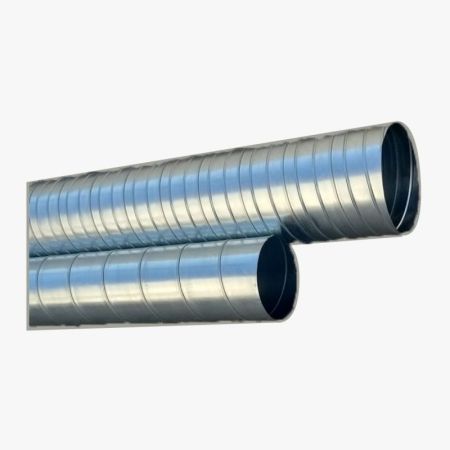
Spiral-wound zinc-coated steel sheet ductwork is the industrial standard for any medium or high-airflow ventilation system. Produced in standardised diameters (Ø80–Ø1250 mm), in fixed-length bars (usually 3 m), it offers the lowest pressure losses of all ductwork types.
When to use: industrial and commercial systems, air handling units, general ventilation in halls and warehouses, HoReCa systems with long ductwork runs.
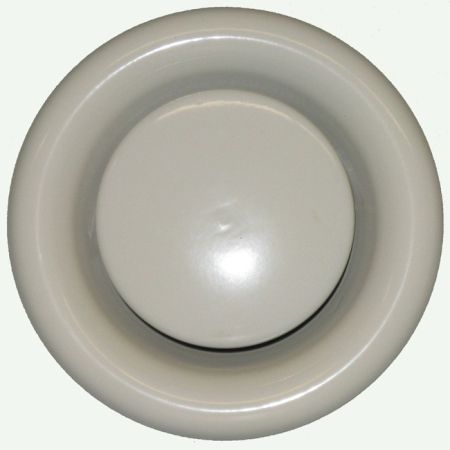
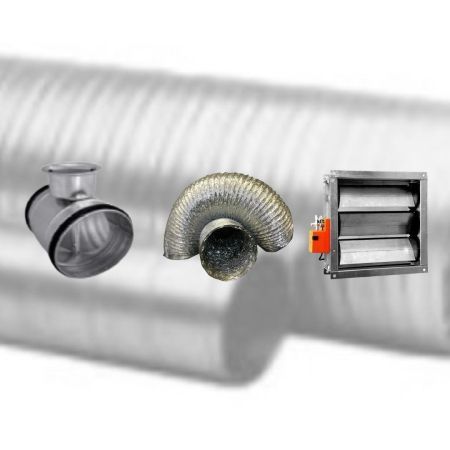
Accessories available on ventilation.ro: T-pieces (for branches), 90° and 45° bends, reducers, non-return dampers, anti-vibration flexible connectors, fixed connectors and joining sleeves, rain protection, end caps and duct nipples.
2. Flexible ductwork (aluminium or PVC)
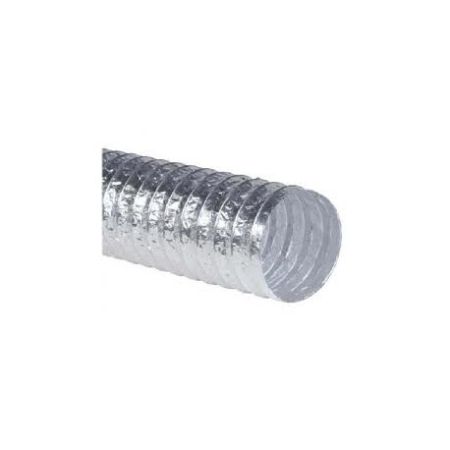
Flexible ductwork is the connecting element between rigid ductwork and equipment (fans, heat recovery units, grilles, diffusers). It must not be used as a main run over long distances.
Golden rule for flexible ductwork: maximum 1.5–2 m per segment, fully extended (not crinkled), with as few bends as possible.
On ventilation.ro: non-insulated flexible ductwork — for short connections in temperature-controlled spaces; insulated flexible ductwork (with mineral wool) — for connections with risk of condensation or thermal losses.
3. Rectangular ductwork
Used in systems with limited height clearance (low suspended ceilings, basements, plant rooms) where a circular duct would not physically fit.
How to Choose the Correct Duct Diameter: The Air Velocity Rule
| Application | Recommended air velocity (m/s) |
|---|---|
| Residential ventilation (bedrooms, living rooms) | 2–4 m/s |
| Commercial ventilation (offices, restaurants) | 4–6 m/s |
| Industrial ventilation (halls, warehouses) | 6–10 m/s |
| Main duct (high-airflow section) | 6–8 m/s |
| Secondary branches | 3–5 m/s |
| Supply/extract grilles | 1.5–3 m/s |
Diameter calculation formula:
D (mm) = √(4 × Q / π / v) × 1000
where Q = airflow in m³/s, v = velocity in m/s
Practical example: Airflow 3,000 m³/h = 0.833 m³/s, desired velocity 6 m/s: D = √(4 × 0.833 / π / 6) × 1000 ≈ 420 mm → choose standardised Ø400 mm
Pressure Loss Calculation: The Essential Tool
The pressure loss calculator on ventilation.ro automates this calculation — enter airflow, length, diameter, number of bends and accessories, and obtain total ΔP in Pa.
Practical rule: a 90° bend in a Ø200 mm duct is equivalent to ~3 m of straight duct in terms of pressure loss.
Materials and Corrosion Resistance
Zinc-coated steel sheet — standard for 95% of industrial and commercial applications. Not recommended for environments with aggressive chemicals or extreme humidity (professional kitchens with intensive steam without grease filters).
AISI 304 stainless steel — mandatory in professional kitchens with insufficient grease filters, laboratories, medical facilities, food industry.
PVC — used in simple residential systems. Not recommended at temperatures >60°C or in industrial applications.
Critical Accessories That Designers Frequently Overlook
Anti-vibration flexible connector — mounted between the fan and rigid ductwork. Absorbs motor vibrations and prevents their transmission into the building structure.
Non-return damper — mounted at the fan outlet or external opening. When the fan is off, prevents backflow of cold air from outside.
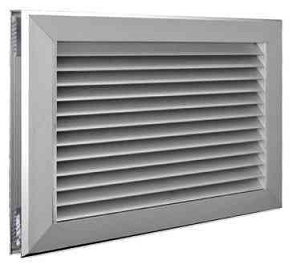
Rain protection — at every external opening. Prevents water and insect ingress.
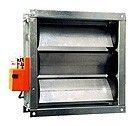
Regulating dampers — with manual actuation (for initial network balancing) or with servomotor (for automatic regulation based on CO2 or occupancy sensors).
Quick Selection Guide by Application
| Application | Recommended ductwork | Indicative diameter | Mandatory accessories |
|---|---|---|---|
| Restaurant hood fan (CF HP) | Rigid zinc-coated + aluminium flex | Ø200–315 mm | Non-return damper, rain protection, anti-vibration flex connector |
| Industrial hall ventilation | Rigid zinc-coated SPIRO | Ø315–630 mm | Bends, T-pieces, reducers |
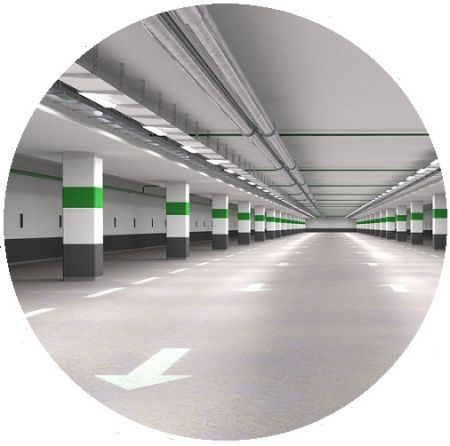
| Underground car park (Jet Fan) | Rigid zinc-coated or stainless | Ø500–800 mm | Fire dampers, F400 shutters |
| Residential HRV unit | Insulated flex Ø75–160 mm | Ø75–160 mm | Air distributors, diffusers |
| Flat bathroom group | Flex PVC or aluminium | Ø100–125 mm | Non-return damper, external grille |
Conclusion
ventilation.ro offers a complete range of rigid and flexible ductwork, mechanical accessories and the pressure loss calculator — all the tools needed for a complete and correct ventilation project.
Contact the team at +40 722 667 238 or browse the mechanical accessories range directly on ventilation.ro.


Post comment