










 Solutions KIT
 Sales
Sales













 My account
 View cart
Ventilation Airflow Calculation for Offices, Classrooms and Commercial Spaces: Formulas and Real Examples
A practical guide with formulas, tables and numerical examples for installers, designers and building managers
The Universal Calculation Formula
Q (m³/h) = V × N
where Q = required ventilation airflow (m³/h), V = ventilated space volume (m³), N = number of air changes per hour.
Alternative formula — per person:
Q (m³/h) = no. of persons × airflow per person
Recommended airflow per person: 20–25 m³/h (light activity), 45 m³/h (normal activity), 60 m³/h (intense activity).
Reference Table: Air Changes per Hour by Space Type
| Space type | Air changes/hour (N) | Notes |
|---|---|---|
| Offices | 4–8 | 6 recommended, more for high occupancy density |
| Classrooms | 4–8 | Minimum 30 m³/h per pupil per sanitary standards |
| Conference rooms | 6–12 | High-density, time-limited occupancy |
| Food retail stores | 6–12 | Odours and moisture from fresh produce |
| Shopping centres (gallery) | 4–6 | General ventilation + technical zones |
| Restaurants (dining room) | 8–12 | Non-smoking; +50% if smoking areas |
| Public bathrooms | 10–15 | Humidity and odours |
| Sports halls | 6–10 | + Cooling (summer), humidity (perspiration) |
| Pharmacies, clinics | 6–12 | Air filtration recommended (HEPA) |
Example 1: Open-plan Office — 200 m², 30 employees
Data: 200 m² × 2.8 m height = 560 m³ volume; 30 persons
Volume calculation: Q = 560 × 6 = 3,360 m³/h
Per-person calculation: Q = 30 × 45 = 1,350 m³/h
Airflow chosen: 3,360 m³/h (the larger of the two)
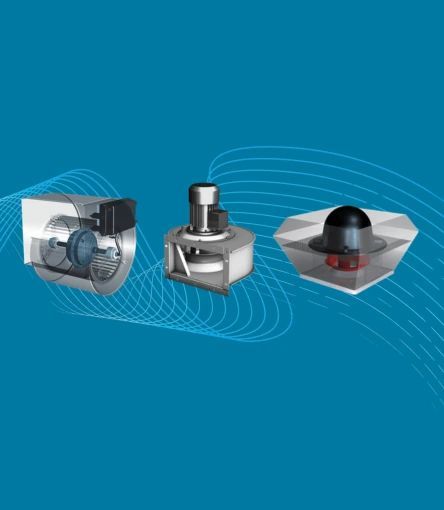
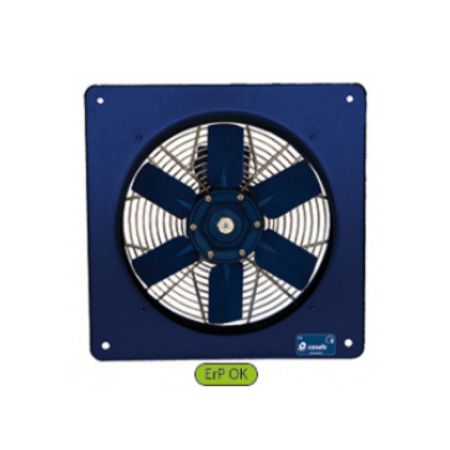
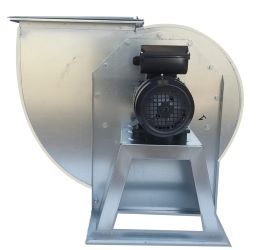
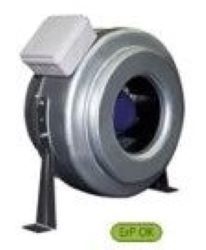
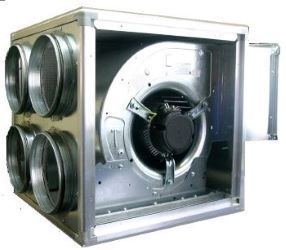
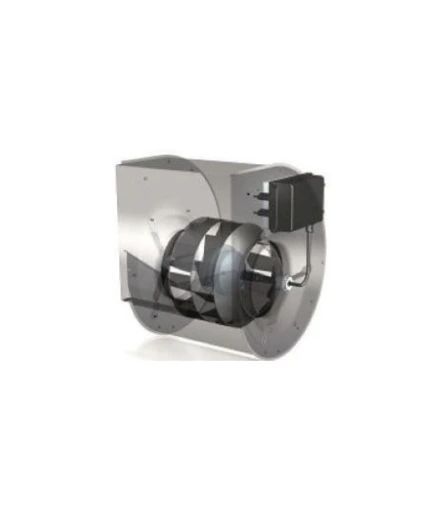
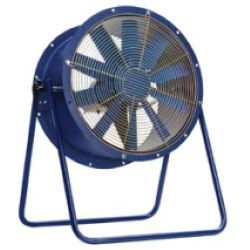
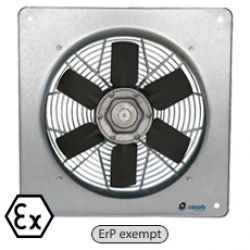
Recommended fan: centrifugal incorporated fan with EC motor from the ventilation.ro range, airflow ~3,500 m³/h, with automatic control via CO2 sensors (available in the HVAC Control category, over 50 products on ventilation.ro).
Example 2: Classroom — 60 pupils, 100 m²
Data: 100 m² × 3.2 m height = 320 m³ volume; 60 pupils + 2 teachers = 62 persons
Per-person calculation (sanitary standard: minimum 30 m³/h per pupil/staff in educational units): Q = 62 × 30 = 1,860 m³/h
Volume calculation: Q = 320 × 6 = 1,920 m³/h
Airflow chosen: 1,920 m³/h
Important note: Studies show that at CO2 concentrations above 1,000 ppm, pupil cognitive performance drops by 15–20%. Investing in good classroom ventilation has a direct effect on academic results.
Example 3: Food retail store — 300 m²
Data: 300 m² × 3.5 m height = 1,050 m³ volume; 12 hours/day operation
Volume calculation: Q = 1,050 × 8 = 8,400 m³/h
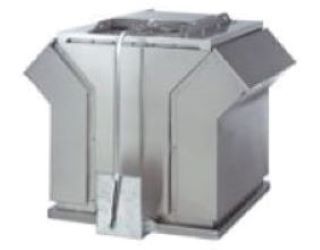
Airflow chosen: 8,400 m³/h — distributed via 2–3 rooftop fans from the ventilation.ro range or a central centrifugal fan with duct distribution.
Special note: A food store requires slight positive pressure (indoor air slightly above outside) to prevent odours and insects entering through doors. The ventilation system must be designed with a slightly higher supply airflow than extraction airflow.
How to Use the ventilation.ro Calculators
On ventilation.ro there are two interactive tools:
- Duct pressure loss calculator — enter airflow, length, diameter, number of bends and filters → obtain total pressure loss in Pa
2. Required air ventilation airflow guide — step-by-step guide for airflow calculation based on space type
Selecting the Fan from the Calculated Airflow
Once the required airflow (Q in m³/h) and estimated pressure loss (ΔP in Pa) are known, fan selection is made from the Q-P characteristic curve (airflow vs. pressure) in the product technical datasheet:
- Draw a horizontal line at the total calculated ΔP
- Draw a vertical line at the required Q
- The intersection must be below the fan's curve
- Ideally, the operating point should be in the maximum efficiency zone (middle of the curve)
ventilation.ro displays technical datasheets with operating curves for all catalogue products — downloadable directly from each product page in PDF format.


Post comment