











 Solutions KIT
 Sales
Sales



















 My account
 View cart
How to Choose the Right Ventilation Fan for Your Home — Complete Guide
Looking to install a fan at home but not sure which model to choose? This guide explains the difference between types, how to calculate the airflow you need, and what to avoid when buying.
Stale air in the bathroom, persistent kitchen odours, humidity that encourages mould on the walls — all of these are signs that your home's ventilation isn't working well enough. The solution exists and is not complicated, but choosing the wrong fan means the problem either stays unsolved or a new one appears: noise, high energy consumption, or a unit that fails within months.
This guide walks you through, step by step, how to choose the right fan for every room in your home — no advanced technical knowledge required.
Why Ventilation Matters in the Home
Before anything else, it's worth understanding why ventilation is more important than it seems.
An adult exhales approximately 200 ml of water vapour per hour. A 10-minute shower adds up to 2.5 litres of water vapour into the bathroom. Cooking produces grease particles, smoke and moisture every single day. All of this moisture and all of these pollutants need to leave the home — otherwise they settle on surfaces, create ideal conditions for mould, and degrade the air quality you breathe.
Natural ventilation (through open windows) is insufficient during cold months when windows stay shut, and in apartments where the layout doesn't allow cross-ventilation. A mechanical fan solves the problem in a controlled way, regardless of the season.
Step 1: Identify Where You Need Ventilation
Not all rooms have the same needs. Before buying anything, answer a few simple questions.
The bathroom is the first place to check. If the mirror stays fogged for more than 15–20 minutes after a shower, or if mould appears periodically on the ceiling, you need an extraction fan.
The kitchen needs extraction especially if you don't have a cooker hood, or if the existing hood recirculates air back into the room through a carbon filter rather than extracting it outside. A kitchen fan must handle grease particles — not every model is up to that.
Bedrooms and living rooms are less commonly fitted with separate fans, but in well-insulated apartments (triple glazing, airtight doors), fresh air no longer enters naturally. This is where a heat recovery ventilator comes in — a more sophisticated unit that refreshes the room's air without losing the warmth you've built up.
Basements or utility rooms may require ventilation if there is a risk of moisture build-up or gas accumulation.
Step 2: Calculate the Airflow You Need
Airflow is measured in cubic metres per hour (m³/h) and represents the volume of air a fan can move in 60 minutes. The general rule for homes is that the air in a wet room should be changed 8–12 times per hour.
Simple formula:
Required airflow (m³/h) = Room volume (m³) × air changes per hour
Practical example: a bathroom measuring 2.5 m × 2 m with a 2.5 m ceiling has a volume of 12.5 m³. Multiplied by 10 air changes per hour = 125 m³/h minimum required.
Quick reference:
- Small bathroom (up to 5 m²): 80–100 m³/h
- Medium bathroom (5–8 m²): 100–150 m³/h
- Kitchen (without a cooker hood): 150–300 m³/h
- Bedroom or living room (supplementary ventilation): 50–100 m³/h
Always choose a model with slightly more airflow than the calculated minimum — ducting, grilles and bends reduce real-world performance below the manufacturer's rated figure.
Step 3: Choose the Right Type of Fan
Bathroom fans (wall-mounted or ceiling-mounted)
These are the simplest and most common. They are installed directly on the wall or ceiling, connected to an existing or newly created ventilation duct. They typically run simultaneously with the light or have a timer that keeps them running for a few minutes after the light is switched off.
What to look for:
- Noise level — below 35 dB(A) for a quiet bathroom. Quieter models typically use ball bearings and a higher-quality motor.
- Moisture protection rating — IP54 is the minimum recommended for a bathroom; IP65 is better if the fan is mounted near a shower.
- Timer — useful for continuing extraction for a few minutes after you've left the bathroom, fully eliminating residual moisture.
- Humidity sensor — more advanced models start automatically when humidity exceeds a set threshold. Convenient and energy-efficient.
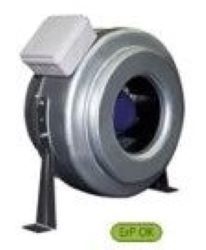
👉 Browse the range of inline/ceiling fans — suitable for bathrooms, toilets and small spaces.
Kitchen fans
The kitchen places tougher demands than the bathroom: higher airflow, resistance to grease and elevated temperatures. If you don't have a cooker hood that extracts outside (not recirculation), a dedicated extraction fan is the practical, affordable solution.
What to look for:
- Airflow — minimum 150 m³/h for a standard kitchen; more if you cook frequently or have a multi-burner hob.
- Materials — a fan with a grease-resistant rotor and casing is essential. Bathroom fans are not suitable for long-term kitchen use.
- Ease of cleaning — the rotor and grille should disassemble easily, as they will clog periodically.
Axial fans — for window or external wall mounting
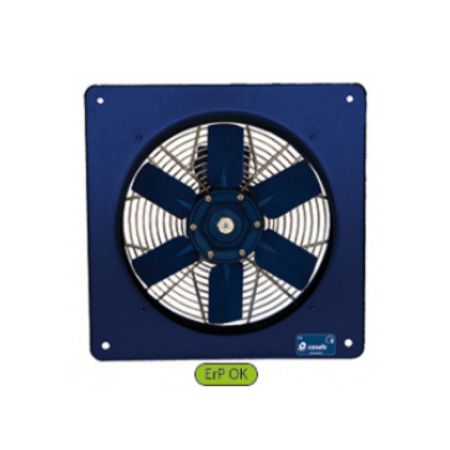
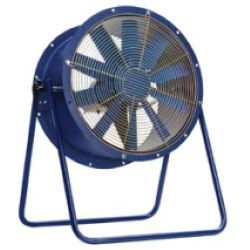
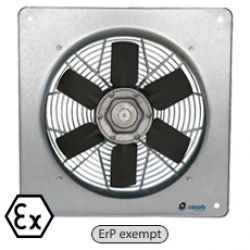
Axial fans mounted directly in a wall or window are a simple, cost-effective solution that requires no ducting. They are suitable for kitchens, workshops, garages, or any space with direct access to the outside.
Main advantage: quick installation, no ductwork needed.
Limitation: they don't perform well when the distance to the outside is long or when there is significant flow resistance (bends, grilles). They are also noisier than centrifugal fans at similar airflow rates.
👉 See the range of axial fans — suitable for direct wall or window installation.
Centrifugal fans — for ducted installations
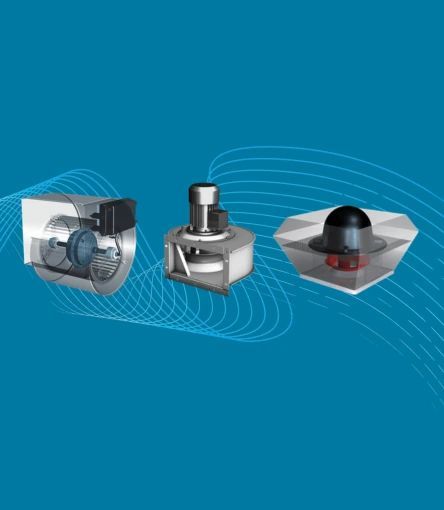
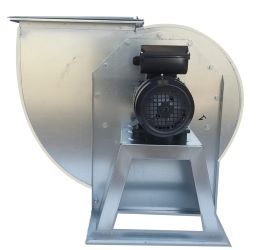
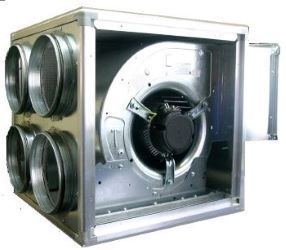
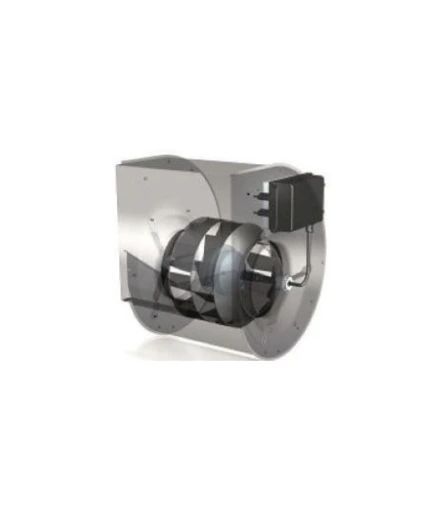
If your bathroom or kitchen connects to a ventilation duct running more than a few metres or with multiple bends, you need a centrifugal fan. These generate higher static pressure than axial fans and push air efficiently even through more complex installations.
They are typically installed in the false ceiling or outside the ventilated space, along the duct run — making them practically invisible and quieter in the room.
👉 Explore centrifugal fans for residential ducted installations.
Heat recovery ventilators — for well-insulated homes
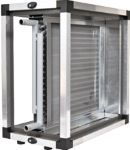
If you live in a new or recently renovated apartment with triple-glazed windows and airtight doors, air no longer circulates naturally. The right solution is not to open the window in winter, but a heat recovery ventilator (HRV — Heat Recovery Ventilator).
An HRV continuously extracts stale air from inside and brings fresh air in from outside, but simultaneously recovers 70–90% of the heat from the outgoing warm air. The result: clean air at all times, without high heating bills.
👉 Explore the range of residential heat recovery units — the complete solution for modern homes.
Step 4: Check 5 Things Before You Buy
1. Is there an existing ventilation duct? If yes, check its diameter and length — the chosen fan must be compatible. A 100 mm duct cannot connect directly to a 150 mm fan without an adapter.
2. Where will you mount the fan? On an exterior wall, the ceiling, or in-duct? The installation type influences the model you need.
3. How will it be controlled? Simultaneously with the light, via a separate switch, through a humidity sensor or timer? Control options vary between models and affect everyday comfort.
4. How important is noise? If the bathroom is next to a bedroom or you're sensitive to noise, filter models by their stated noise level. Below 30 dB(A) is virtually silent; above 45 dB(A) will be constantly noticeable.
5. What warranty and after-sales service does the manufacturer offer? A quality fan has a lifespan of 10–15 years. Make sure spare parts and service are available.
Common Mistakes When Buying a Home Fan
Choosing by price first. A cheap fan with poor-quality bearings becomes noisy within 12–18 months and needs replacing. In the long run, a mid-range quality model costs less.
Ignoring real-world airflow. Manufacturers state airflow at zero static pressure — in practice, ducts and grilles reduce actual airflow by 20–40%. Calculate with a margin.
Installing a bathroom fan in the kitchen. Grease clogs the rotor and damages the motor. These are different product categories.
No make-up air inlet. An extraction fan needs air to enter from somewhere in order to work effectively. If the bathroom door is airtight and there's no transfer grille, the fan will struggle and efficiency drops dramatically. A simple transfer grille on the door solves the problem.
Conclusion
Choosing a home fan is not complicated if you follow the steps in order: identify the room and the problem, calculate the required airflow, choose the right type, and check the technical details before purchasing. The result of a well-chosen, correctly installed fan shows quickly: cleaner air, no mould, no persistent odours, and no high energy bills.
Find the Right Fan for Your Home
At ventilation.ro you'll find a complete range of residential fans — from simple bathroom and kitchen models to heat recovery units for modern apartments.
📞 Questions? Call us: +40 722 667 238 — our team will help you choose the right model for your specific situation.
Useful categories:


Post comment