








 Solutions KIT
 Sales
Sales







 My account
 View cart
 Ventilation for production halls — technical requirements, industrial risks and solutions by industry type
Production hall ventilation: industry-specific requirements, ATEX, corrosion-resistant, smoke extraction, airflow calculation. Guide for production managers and engineers.
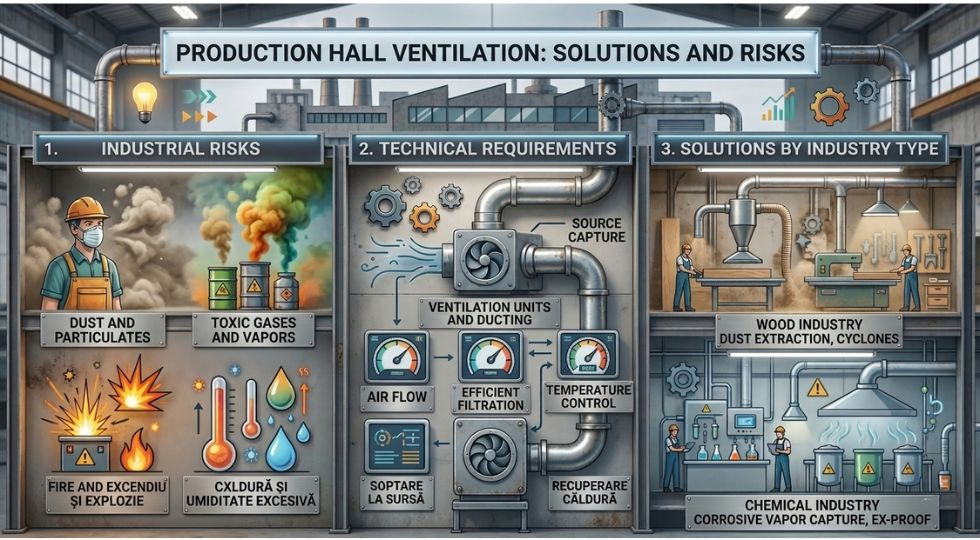
Production halls are the category with the most complex ventilation requirements across all industrial construction. Unlike a logistics warehouse where ventilation primarily addresses temperature and general air quality, a production hall can simultaneously generate excessive heat, solvent vapours, dust, toxic gases, corrosive vapours or a potentially explosive atmosphere — each with specific requirements and distinct legal implications.
If you are a production manager, facilities engineer or technical director at a factory in Romania, this guide explains exactly what obligations you have for each type of risk, what happens when the ventilation system is inadequate, and what solutions work in practice across specific industry types.
The two levels of industrial production ventilation
Every production hall requires two types of ventilation that work complementarily — not as alternatives:
General ventilation removes accumulated heat, maintains overall air quality and ensures the minimum number of air changes required by regulations. It is provided by axial wall fans, roof extract units and fresh air supply systems.
Local exhaust ventilation captures pollutants at their point of generation — local extraction at machine tools, canopies above chemical treatment baths, extraction at spray booths — before they disperse into the hall volume. Without correct local exhaust, general ventilation becomes ineffective for halls with point-source pollution.
Standard I5-2022 states that local exhaust ventilation takes priority over general ventilation for pollutants identified at source. The technical design must address both systems.
Requirements by industry type — what you need in practice
Metallurgy and metal processing
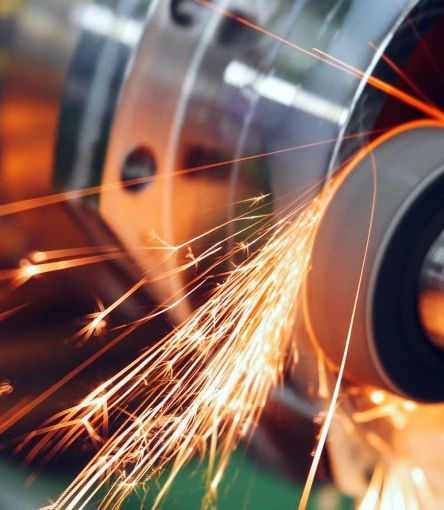
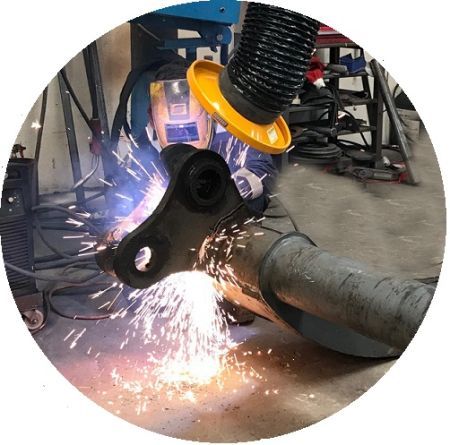
Main risks: intense heat from furnaces and welding operations, welding fume (fine metallic particles and toxic gases), abrasive metal dust.
General ventilation: high airflows, 15–30 air changes/hour in furnace areas. Fans must withstand elevated air temperatures — external motor or belt-drive models are appropriate for areas immediately adjacent to heat sources.
Local exhaust: suction canopies at every welding station, local extraction at grinding and polishing machines. Local exhaust airflow is calculated based on the capture hood opening area and required capture velocity (0.5–1.0 m/s for moderately toxic substances, 1.0–2.5 m/s for highly toxic substances).
Equipment:
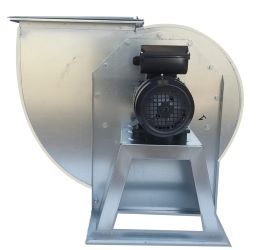
- Centrifugal fans for local exhaust (high static pressure to overcome long duct runs from machines to exterior)
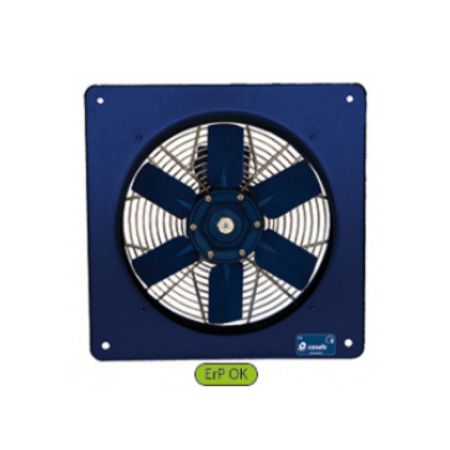
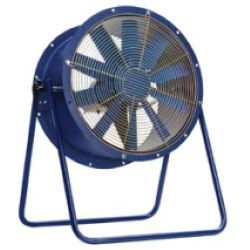
- Belt-drive or external motor axial fans for general extraction in furnace areas
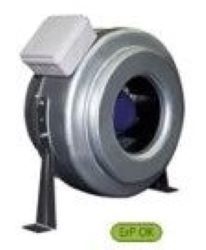
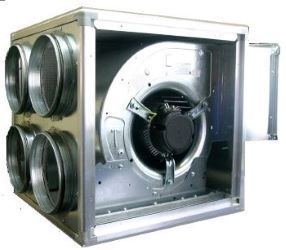
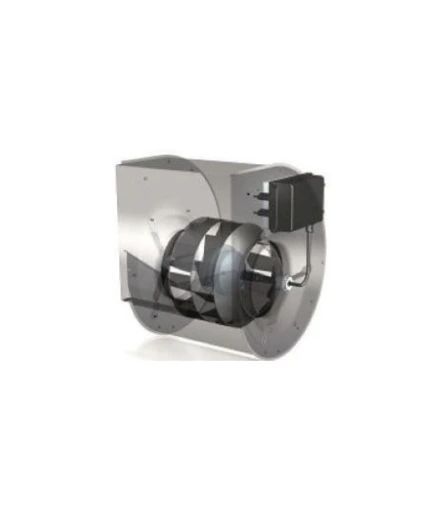
👉 External motor axial fans 👉 Medium-pressure centrifugal fans
Chemical and petrochemical industry
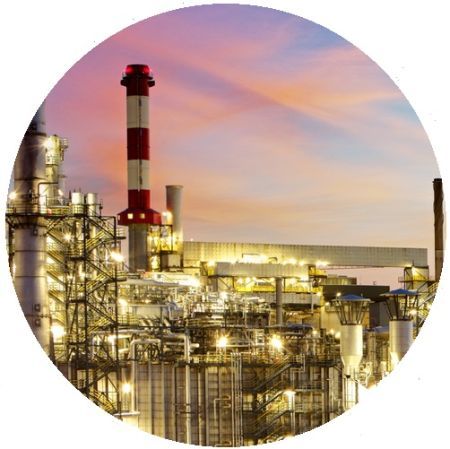
Main risks: organic solvent vapours, toxic gases, potentially explosive atmosphere (ATEX), corrosive agents attacking standard materials.
This is the category with the strictest requirements and the most severe consequences for non-compliance.
When ATEX certification is mandatory: any space where there is a risk of explosive atmosphere from vapours, gases or flammable dust. ATEX zone classification (Zone 0, 1, 2 for gases; Zone 20, 21, 22 for dust) is carried out by a certified specialist and documented in the DPIA (Explosion Protection Document). All electrical equipment in classified zones — including fans — must be ATEX certified to Directive 2014/34/EU. There is no exception and no legally acceptable substitute.
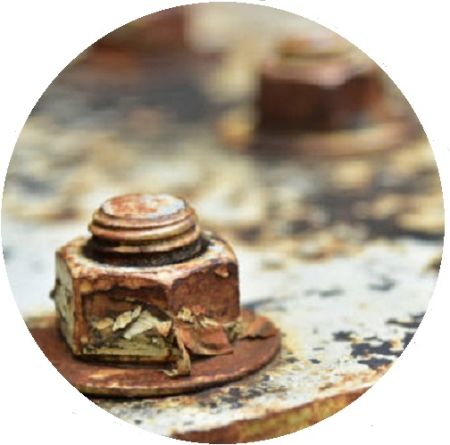
When corrosion-resistant variants are required: when the ventilated air contains acid vapours (hydrochloric, sulphuric, nitric), alkalis or other agents that attack standard galvanised steel or aluminium. A standard steel fan in an environment with hydrochloric acid vapours fails within 6–18 months. PP/PE plastic or AISI 304 stainless steel variants withstand the same conditions for years.
Equipment:
- Casals MBPCX — PP plastic, forward-curved blades, ATEX II3G Zone 2 — for general extraction in classified zones with corrosive air
- Casals MBPX — antistatic PE plastic, backward-curved blades, ATEX II3G Zone 2 — for zones with additional electrostatic risk
- Casals MDI — AISI 304 stainless steel, max. temp. 130°C — for corrosive air at elevated temperatures, without ATEX risk
- Casals MBP — PP/PE plastic with self-cleaning impeller — for corrosive air at moderate temperatures, without ATEX risk
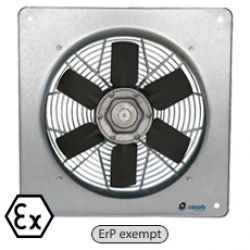
👉 ATEX corrosion-resistant fans Zone 2 👉 Corrosion-resistant fans without ATEX 👉 Complete ATEX range
Furniture industry and wood processing
Main risks: suspended wood dust (explosion risk at high concentrations — ATEX Zone 21/22), sawdust, solvent-based lacquer and paint vapours, heat from dryers.
Critical distinction: wood dust is classified as a flammable substance under ATEX standards. A wood dust explosion is among the most devastating in industry. Any fan installed in areas with suspended wood dust must be ATEX certified for dust (category 2D or 3D, Zone 21 or 22).
Ventilation for lacquers and paints: the spraying and lacquering area must be treated as an ATEX gas zone (solvent vapours). Airflows of 20–60 air changes/hour are standard for spray booths. Fans must be ATEX II3G for gases.
Equipment:
- ATEX centrifugal fans for local exhaust in the lacquering area
- Wood dust filtration system (cyclone + fine filter) on the exhaust path
- ATEX axial fans for general ventilation of dust-risk areas
👉 ATEX axial fans 👉 ATEX centrifugal fans
Food industry
Main risks: water vapour and high humidity (condensation, mould, accelerated corrosion risk), varying temperatures across zones (cooking zones at 40+°C, chilling zones at 4–8°C), strict hygiene requirements for supply air.
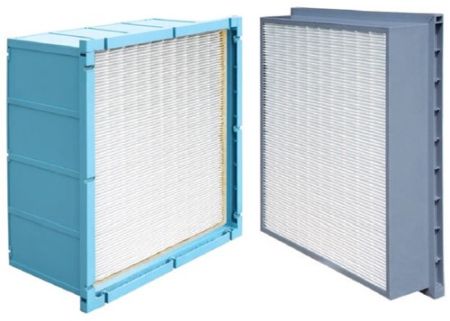
Distinction: unlike other industries where ventilation evacuates pollutants, in the food industry ventilation must also supply clean, filtered air that does not contaminate products. Supply filters (minimum class G4, F7 recommended in sensitive areas) are mandatory.
Materials: galvanised steel corrodes rapidly in the presence of high humidity and organic acid vapours from food processing. AISI 304 stainless steel (Casals MDI series) or food-grade plastic variants are recommended for fans in processing areas.
Equipment:
- AISI 304 stainless steel centrifugal fans for local exhaust
- Silent centrifugal roof units for general extraction (food industry frequently has noise constraints)
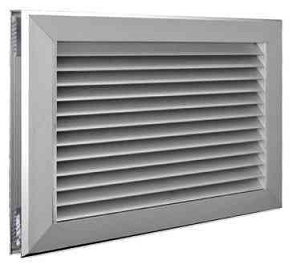
- Grilles and diffusers for filtered air supply without direct airflow onto products
👉 AISI 304 stainless steel centrifugal fans — Casals MDI 👉 Centrifugal roof units
Automotive and electronics — component manufacturing
Main risks: vapours from degreasing and surface treatment baths (corrosive and potentially flammable), dust from grinding and polishing operations, heat from drying ovens and heat treatment, paint spray vapours.
The automotive paint shop is one of the most regulated areas in industry: extraction airflows of 30–60 m/min through the booth cross-section, advanced filtration, solvent recovery or exhaust air treatment, ATEX for paint vapours.
Assembly halls have moderate general ventilation requirements (15–20 air changes/hour) but may require specific local exhaust in areas with bonding, adhesive application or welding operations.
Equipment:
- High-pressure centrifugal fans for installations with long duct runs and advanced filtration
- ATEX fans for paint and degreasing areas
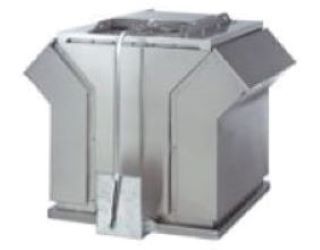
- EC motor roof units for general extraction of large assembly halls
👉 High-pressure centrifugal fans 👉 ATEX fans 👉 EC motor roof units
Airflow calculation for production halls with heat sources
Halls with heat-generating equipment require a more complex calculation than the simple volume × air changes/hour method. The heat dissipated by equipment must be removed in addition to the fresh air requirement.
Extended formula:
Q_heat (m³/h) = Q_equipment (W) / (ρ × c × ΔT × 0.278)
Where:
- Q_equipment = total thermal output of equipment (in Watts)
- ρ = air density = 1.2 kg/m³
- c = specific heat of air = 1,005 J/kg·K
- ΔT = admissible temperature difference between interior and exterior (e.g. 8°C)
- 0.278 = conversion factor W→kJ/h
Example: production hall with equipment dissipating 150 kW = 150,000 W, admissible ΔT = 8°C: Q_heat = 150,000 / (1.2 × 1,005 × 8 × 0.278) = 56,000 m³/h for equipment heat removal alone.
To this must be added the airflow for air changes and any airflow for pollutant dilution. Total airflow can reach 80,000–120,000 m³/h for a medium-sized hall with intensive heat-generating equipment.
EC motor fans in production halls — calculable ROI
Production halls operate 8–16 hours per day, 5–6 days per week, sometimes 24/7. At this duty, the difference between AC and EC motors is substantial.
Comparative calculation for 10 roof units of 2 kW:
| AC motor | EC motor | |
|---|---|---|
| Nominal consumption | 2 kW/unit | 2 kW/unit |
| Real average consumption (at partial load) | 1.8 kW | 1.1 kW |
| Operating hours/year | 3,500 h | 3,500 h |
| Total annual consumption (10 units) | 63,000 kWh | 38,500 kWh |
| Energy cost (0.80 lei/kWh) | 50,400 lei | 30,800 lei |
| Annual saving | — | 19,600 lei |
With 10 roof units, the additional investment in EC over AC is recovered in 18–24 months from energy savings alone.
👉 EC motor roof units — complete range 👉 EC motor fans — all types
Documentation required for industrial ventilation authorisation
A complete file for authorising an industrial ventilation system includes:
From the designer: technical report to I5-2022, installation drawings, airflow and static pressure calculations, hall thermal balance.
From the equipment supplier (ventilation.ro can provide all of the following):
- Original manufacturer data sheets (Casals, Nicotra Gebhardt, Vent-Axia)
- CE declarations of performance for each item of equipment
- ATEX certificates with notified body number (for equipment in classified zones)
- EN 12101-3 documentation for smoke extraction equipment
- Performance curves for duty point selection
From the contractor: commissioning report, airflow and pressure measurements at each point, system balancing record.
Conclusion — industrial ventilation is not a cost, it is an investment with measurable ROI
The three factors that transform ventilation from a mandatory cost into a profitable investment:
1. Staff productivity. A hall ventilated to 24–26°C in summer generates 15–25% more productivity than one at 32–34°C. With 100 employees on an average salary of 4,000 lei, the monthly difference exceeds 60,000 lei.
2. Energy saving from EC motors. Calculable at 15,000–40,000 lei annual saving per average hall compared to AC motors — with no operational changes whatsoever.
3. Avoiding non-compliance costs. ISU and ISC fines for non-compliant ventilation and smoke extraction systems reach tens of thousands of lei. Suspension of operations for urgent remediation costs incomparably more.
We work with you from specification to delivery
ventilation.ro — exclusive importer of Casals, Nicotra Gebhardt and Vent-Axia in Romania — offers for production halls:
- Free technical consultancy for equipment selection based on your specific industrial process
- Complete documentation for the designer and for authorisations — including ATEX certificates and EN 12101-3
- Local stock for standard models — immediate delivery
- Formal quotations with complete technical specifications for tenders and public or private procurement
📞 +40 722 667 238 🌐 ventilation.ro/en/category/341/aplicatii-industriale.html
Related articles: Logistics warehouse hall ventilation · ATEX fans — complete guide · Industrial fans — how to choose · Airflow calculator


Post comment