








 Solutions KIT
 Sales
Sales








 My account
 View cart
Standard I5-2022 vs I5-2010 — What Changed and What Every HVAC Designer in Romania Needs to Know
Standard I5-2022 came into force in March 2023, replacing I5-2010 which governed ventilation and air conditioning installation design in Romania for 12 years. The differences are not minor — I5-2022 aligns Romania with current European standards, introduces new requirements for nZEB buildings and fundamentally changes how indoor air quality is calculated and documented. This guide summarises the most important practical changes for installation designers.
Why the revision was needed
I5-2010 was drafted before the nZEB standard became a legal reality in Romania and before the European indoor air quality standards (EN 16798, replacing EN 13779) were published in their current form. Over 12 years of application, increasingly obvious discrepancies appeared between I5-2010 requirements and European normative references, creating difficulties in designing new high-performance energy buildings.
I5-2022 resolves these discrepancies, fully adopts European terminology and methodology, and introduces the requirements that make compliance with the nZEB standard — mandatory since 2023 — achievable.
Change 1 — Indoor air quality: new categories, new terminology
I5-2010: indoor air quality was classified in vague categories with references to national standards from earlier decades.
I5-2022: fully adopts the European classification system from SR EN 16798-1:
| Category | Description | Typical application |
|---|---|---|
| IDA 1 | High quality | Hospitals, cleanrooms, passive buildings |
| IDA 2 | Good quality | New office buildings, new schools, nZEB homes |
| IDA 3 | Medium quality | Existing offices, commercial spaces |
| IDA 4 | Low quality | Industrial spaces, warehouses |
Practical impact: the fresh air supply rate per person is now calculated based on the chosen IDA category and building characteristics (pollution from construction materials, occupancy), not from a fixed table. A new modern office building must be designed for IDA 2, which may require higher airflow rates than under I5-2010.
Outdoor air quality is also classified: ODA 1 (clean air), ODA 2 (high particulate pollution), ODA 3 (high toxic gas pollution) — with direct impact on the required filter class.
Change 2 — Heat recovery becomes a requirement, not a recommendation
I5-2010: heat recovery was "recommended" for systems with high airflow rates. The vague wording allowed frequent omission of MVHR systems in residential projects.
I5-2022: heat recovery for two-circuit systems (supply + extract) is mandatory for all installations where the fresh air supply rate exceeds 1,000 m³/h in public and commercial buildings, and for all nZEB buildings regardless of airflow. Minimum heat exchanger efficiency: 75% for nZEB buildings.
This change is fundamental for designing new residential buildings — an MVHR system can no longer be omitted from a project on cost grounds.
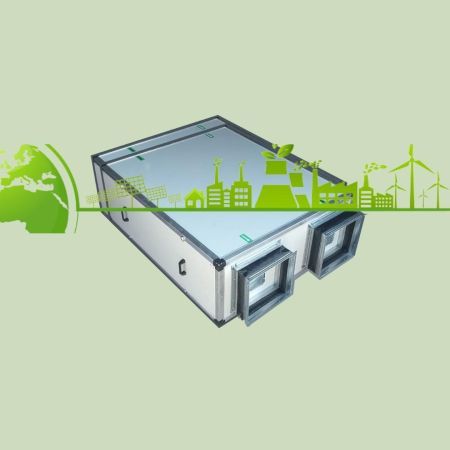
👉 Heat recovery units — complete range ventilation.ro
Change 3 — Air filtration: new mandatory classes
I5-2010: filtration requirements were minimal and not correlated with outdoor air quality.
I5-2022: introduces a mandatory filtration matrix based on the correlation between the required indoor air quality category (IDA 1–4) and the available outdoor air quality (ODA 1–3):
| Required indoor quality | ODA 1 outdoor air | ODA 2 outdoor air | ODA 3 outdoor air |
|---|---|---|---|
| IDA 1 | F7 + F9 | F7 + F9 | F7 + F9 + ePM1 |
| IDA 2 | ePM10 | F7 | F7 + F9 |
| IDA 3 | G4/ePM10 | ePM10 | F7 |
| IDA 4 | G4 | G4 | ePM10 |
Practical impact: a new office building (IDA 2) in a city with heavy traffic (ODA 2) requires an F7 filter on the air supply. Previously, G4 was considered sufficient in many projects. This increases operating cost (more expensive filters, changed more frequently) but also actual indoor air quality.
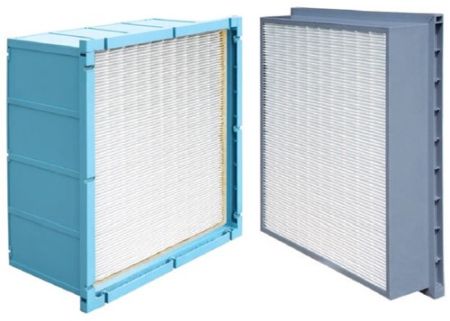
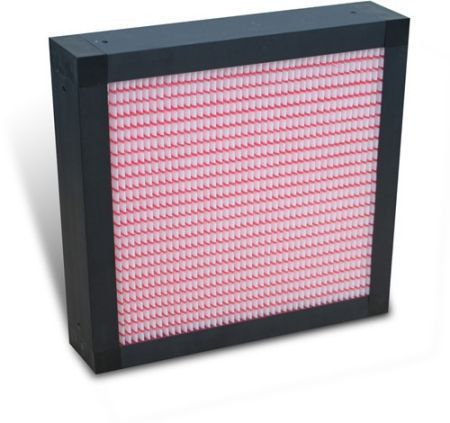
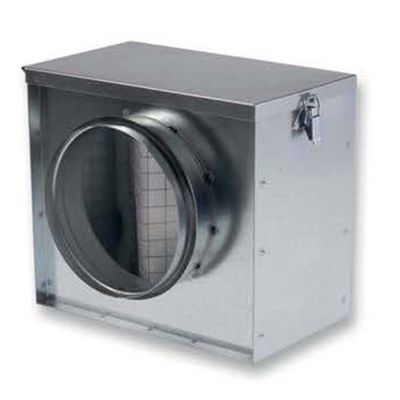
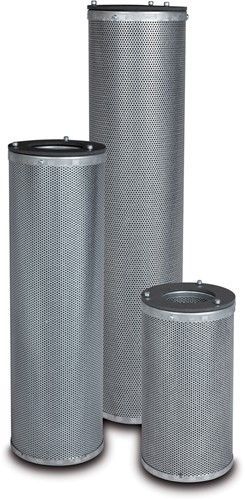
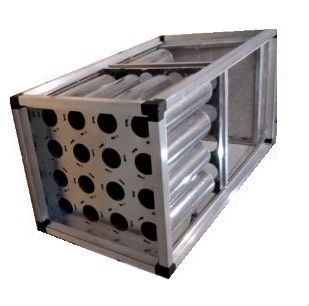
👉 Air filters — G4 to HEPA classes for ventilation systems
Change 4 — Airflow calculation: multiple recognised methods
I5-2010: airflow calculation was based primarily on air changes per hour (normative tables), with a single calculation method.
I5-2022: recognises three calculation methods with a clear hierarchy:
Method 1 — Per person: airflow based on number of occupants and required IDA category. This is the preferred method for spaces with controlled occupancy (offices, conference rooms, dwellings).
Method 2 — Per m²: airflow based on floor area, used when occupancy is variable or unknown. Values in I5-2022 are correlated with SR EN 16798-1 and differ from I5-2010 tables.
Method 3 — Per air changes per hour: the classic I5-2010 method, still accepted but not preferred for new buildings. May be used for industrial and technical spaces.
Practical impact: for an office building project, Method 1 (per person) will frequently give a higher airflow than Method 3 (air changes) applied with I5-2010 values. The designer must choose the method appropriate to the building type and justify it in the technical report.
Change 5 — Ventilation of nZEB buildings: new dedicated chapter
I5-2022 includes a dedicated chapter for nZEB buildings that did not exist in I5-2010. Specific requirements for nearly zero energy buildings:
- MVHR with heat recovery efficiency ≥ 75% — mandatory, not optional
- Variable airflow control based on occupancy, CO₂ concentration or air quality — constant volume systems are accepted but not recommended for nZEB
- Summer bypass: the heat exchanger must include provision for full or partial bypass in summer, to enable overnight free cooling with outdoor air without heat recovery
- Installation airtightness: the air leakage limit for ventilation ductwork is stricter than in I5-2010 — relevant for installers constructing duct networks
Change 6 — Normative references: European standard replaces national STAS
I5-2010 frequently cited national STAS standards, many originating in standards from earlier decades. I5-2022 replaces these references with current European standards:
| I5-2010 reference | I5-2022 reference |
|---|---|
| SR EN 13779:2007 (non-residential ventilation) | SR EN 16798-1:2019 + SR EN 16798-3:2017 |
| SR CR 1752:2002 | SR EN 16798-1:2019 (replaced) |
| STAS 6648/1-82 (external heat gain) | SR EN ISO 52016 |
| SR EN ISO 7730 | SR EN 16798-1 (thermal comfort) |
Practical impact: projects verified and approved after 2023 must cite the updated standards. A technical report citing SR EN 13779:2007 or SR CR 1752:2002 will be returned by the project verifier.
What has not changed — important continuity
Not everything is new. Several fundamental principles from I5-2010 remain valid in I5-2022:
- The principle of local exhaust ventilation taking priority over general ventilation for pollution sources identified at source (I5-2022, art. 2.1.1.4)
- Organised natural ventilation remains accepted where conditions permit (I5-2022, cap. 2.2.3)
- Noise level requirements from installations (< 35 dB(A) in residential spaces, < 45 dB(A) in offices) are maintained and detailed
Comparison table — top changes I5-2010 vs. I5-2022
| Aspect | I5-2010 | I5-2022 |
|---|---|---|
| Air quality classification | Vague categories | IDA 1–4 per SR EN 16798-1 |
| Heat recovery | Recommended | Mandatory ≥1,000 m³/h and for nZEB |
| Min. heat exchanger efficiency | Not specified | 75% for nZEB |
| Filtration | Minimal | Mandatory ODA × IDA matrix |
| Airflow calculation methods | Air changes per hour | Per-person method preferred (EN 16798) |
| nZEB buildings | No chapter | Dedicated chapter with specific requirements |
| Reference standard | SR EN 13779:2007 | SR EN 16798-1:2019 |
| Summer bypass | Not mentioned | Mandatory for nZEB installations |
Implications for verification and approval — what to prepare
A technical report compliant with I5-2022 must contain, beyond what was sufficient under I5-2010:
- Chosen IDA category and justification for the building type
- ODA category (outdoor air quality) for the project location — relevant for filter selection
- Selected filtration matrix per I5-2022 with filter specifications
- Justification of the airflow calculation method (Method 1, 2 or 3)
- Heat exchanger efficiency (where applicable) and demonstration of nZEB compliance
- Updated normative references — SR EN 16798-1, SR EN 16798-3, not EN 13779
I5-2022 compliant equipment — where to source it
The transition to I5-2022 frequently requires higher-performance equipment — higher-class filters, heat exchangers with efficiency ≥75%, variable airflow controllers. ventilation.ro supplies:
- Filters in all classes — G4, F7, F9, ePM1, ePM10 for ventilation installations
- Vent-Axia and Casals heat recovery units with efficiencies of 75–90%, nZEB compliant
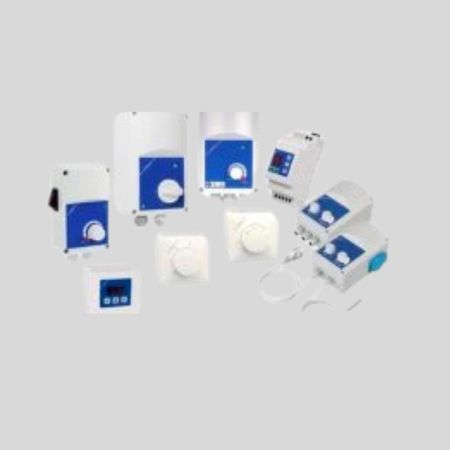
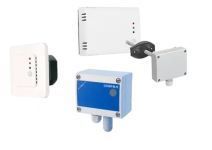
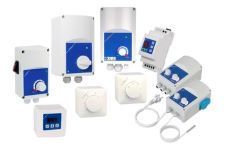
- Speed controllers and CO₂ sensors for variable airflow control
- Technical documentation directly usable in the technical report and approval file
👉 Air filters — G4 to HEPA classes 👉 Residential heat recovery units 👉 Commercial heat recovery units 👉 Speed controllers and sensors for variable airflow
Conclusion — what to do when designing under I5-2022
The transition from I5-2010 to I5-2022 is not a simple table update — it is a methodology change. The main adjustments needed in design practice:
- Adopt the IDA/ODA classification from EN 16798 instead of the old categories
- Calculate airflow per person (Method 1) as the first option, not per air changes
- Select filters based on the ODA × IDA matrix, not from habit
- Include heat recovery with efficiency ≥75% for any nZEB project
- Update normative references in the technical report
📞 +40 722 667 238 — free technical consultancy for your projects 🌐 ventilation.ro — direct importer of Casals, Nicotra Gebhardt, Vent-Axia in Romania
Related articles: P118/1-2025 standard — smoke extraction · Heat recovery units — selection guide · Airflow calculator


Post comment