









 Solutions KIT
 Sales
Sales








 My account
 View cart
Ventilation for Hotels and Guesthouses: What Is Mandatory, How to Choose the Right Equipment and How Much a Complete System Costs
A guest who opens the window in the middle of the night is not doing it for the view. They are doing it because the air in the room is stale, stuffy or too warm — and this almost always happens because of an undersized ventilation system, or, more often, no system at all.
Ventilation in hotels and guesthouses is not a comfort detail. It is a mandatory technical requirement regulated by Standard I5-2022 and NP 079-2002, verified during fire safety (ISU) and public health (DSP) inspections, and directly linked to the star/flower classification of the tourist accommodation structure.
This article explains exactly what is mandatory in each zone of a hotel or guesthouse, which products are suitable, and what a complete system costs.
Why Hotel Ventilation Is Different from Other Buildings
Hotel buildings have specific characteristics that make them harder to ventilate than offices or industrial halls:
Intermittent and unpredictable occupancy. A room may be empty for 18 hours and occupied by 2 people for 6 hours. The system must work both in standby (maintaining air quality) and at maximum occupancy.
Bathrooms without windows. The vast majority of hotel bathrooms have no natural ventilation — mechanical extraction is not optional, it is the only solution.
Long, sealed corridors. Access hallways require their own ventilation to avoid becoming transfer channels for odours between rooms.
Integrated professional kitchen. If the hotel has a restaurant or serves breakfast, the kitchen generates steam, grease and odours that must be managed separately from the accommodation ventilation zones.
Strict acoustic comfort requirements. Standard NP 079 sets noise level limits for guest rooms — noisy fans lead to complaints and penalties at classification inspections.
The Legal Framework — What the Standards Say
Ventilation in hotel structures is governed by:
Standard I5-2022 (Order 173/2023) — the main standard for designing, executing and operating ventilation and air-conditioning systems. Replaces I5-2010 and introduces updated requirements on indoor air quality, minimum airflow rates and energy efficiency.
Standard NP 079-2002 — specific standard for the design of hotels and apartment-hotels. Sets requirements for guest rooms, bathrooms, corridors and common areas.
Tourist accommodation classification methodology (ANT Order 65/2013, as amended — currently under revision in 2026) — star/flower classification criteria for tourist accommodation structures. Certain ventilation and air-conditioning requirements are mandatory for higher category ratings. Note: in May–June 2026 the Ministry of Economy and Tourism published a draft amending order for public consultation; until it is published in the Official Gazette, Order 65/2013 remains the applicable legal basis.
P118-1:2025 — fire safety standard, relevant for ventilation of common areas and kitchens.
Minimum Airflow Rates by Zone
Guest Rooms
Under I5-2022, hotel rooms fall into category ETA 2 (extracted air with moderate pollution). Recommended minimum airflow rates:
| Room type | Minimum recommended airflow | Indicative air changes/hour |
|---|---|---|
| Single room (up to 20 m²) | 30–50 m³/h per person | 1.5–3 ACH |
| Double room (20–30 m²) | 50–80 m³/h | 2–3 ACH |
| Apartment (over 30 m²) | 80–120 m³/h | 2–4 ACH |
Practical note: These values apply to pure mechanical ventilation (no air conditioning). If the room has a split unit or fan-coil, mechanical ventilation provides fresh air only, while the air-conditioning unit manages temperature.
En-Suite Bathrooms
Bathrooms fall into category ETA 3 (extracted air with high pollution — humidity, odours). Extraction is mandatory and extracted air is never recirculated.
| Bathroom type | Minimum extraction airflow |
|---|---|
| Compact bathroom (WC + shower/bath) | 50–80 m³/h |
| Bathroom with continuous low-speed ventilation | 15–25 m³/h standby, 50–80 m³/h occupied |
| Luxury bathroom (area > 8 m²) | 80–120 m³/h |
Recommended solution: fan with 2-speed operation — low speed continuously (maintaining negative pressure relative to the bedroom) and high speed triggered by humidity detection or the light switch.
Corridors and Lobbies
Hotel corridors require ventilation to prevent odour transfer between rooms and to maintain slight positive pressure relative to guest rooms.
| Zone | Recommended airflow |
|---|---|
| Floor corridor (per linear metre) | 10–20 m³/h per m.l. |
| Reception lobby (per m²) | 4–8 m³/h/m² |
| Lift shaft and stairwell | Per P118-1:2025 |
Food Service Areas (Breakfast, In-House Restaurant)
If the hotel includes food service areas, HoReCa standards apply separately — airflow rates are significantly higher and the professional kitchen requires dedicated extraction ventilation. Full details in the article Ventilation in Professional Kitchens and Restaurants.
Solutions by Zone — Which Products to Choose
En-Suite Bathrooms — Silent Fans
This is the zone with the greatest direct impact on guest satisfaction. A noisy fan in the hotel bathroom is the number one installation-related complaint.
Selection criteria for hotel bathroom fans:
- Noise level below 30 dB(A) — absolutely required for 3–5 star rooms
- Timer or humidity sensor (integrated hygrostat) function
- Non-return damper — prevents odour transfer between rooms on the same extraction duct
- Low energy consumption — runs for long hours
Recommended products in stock at ventilation.ro:
Casals silent axial extractors — ERELIS and LIDERO series
Residential/hotel fans with extremely low noise levels (under 28 dB(A)), available in 100 and 150 mm diameters. Airflow 90–340 m³/h depending on model. Integrated non-return damper. Suitable for guest bathrooms in 1–4 star properties.
→ View ERELIS and LIDERO range on ventilation.ro
Fans with hygrostat and timer — TEKSTUR and TEKSTUR PLUS series
Dual textured front panel, adjustable timer, non-return damper. Ideal for hotels where housekeeping cannot individually control every bathroom — the fan continues to run after the guest leaves until residual humidity is fully extracted.
Guest Rooms — Mechanical Fresh Air Supply
For rooms without openable windows, or for properties opting for centralised mechanical ventilation, the standard solution is an in-line ventilation unit mounted in the suspended ceiling, supplying several rooms on the same floor.
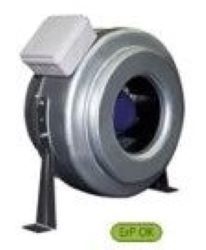
KUVIO in-line fans
Casals in-line fan with silent motor, 100–200 mm diameter, for installation in the suspended ceiling or the corridor technical recess. Can serve 4–8 rooms from a single fan with individual distribution via adjustable dampers.
Long Corridors — Wall-Mounted Axial or Roof-Mounted Fans
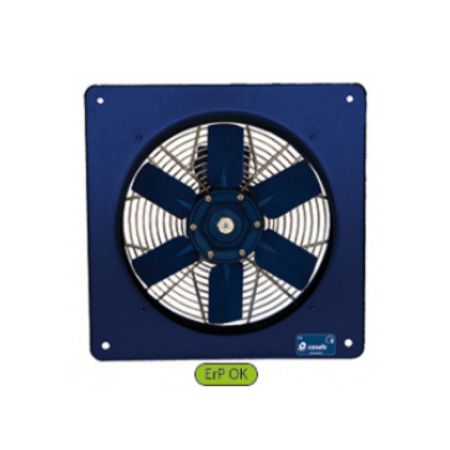
Casals axial fans for corridors
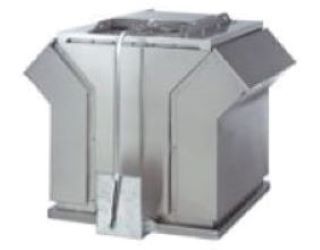
For hotel corridors 20–50 m in length, the solution is an axial fan mounted at the end of the corridor, or a roof unit with distribution through a plenum. Airflow 500–2,000 m³/h depending on corridor length and width.
Common Areas and Reception — Heat Recovery Units
For new or renovated hotels seeking energy efficiency and superior thermal comfort, heat recovery ventilation units are the optimal solution for reception, lobby and conference rooms.
CHR 0800–3000 units
Commercial heat recovery units with efficiency above 70%, available in airflows of 800–3,000 m³/h. Ideal for the hotel lobby where high pedestrian traffic is combined with significant heat losses through ventilation.
→ View commercial heat recovery units
Requirements by Classification Category
Star/flower classification imposes progressively stricter ventilation and air-conditioning requirements:
| Category | Ventilation / air-conditioning requirements |
|---|---|
| 1–2 stars / flowers | Mandatory mechanical ventilation in bathrooms without windows |
| 3 stars / flowers | Mechanical ventilation in all bathrooms + air conditioning capability in rooms |
| 4 stars | Mandatory air conditioning in rooms + mechanical ventilation with individual control |
| 5 stars | Full HVAC system with automatic temperature and air quality control per room |
Note: Even at 1–2 stars, the absence of mechanical ventilation in the bathroom is grounds for failing classification or for a fine at DSP inspection.
Common Mistakes in Hotel Ventilation Design
1. All bathrooms connected to a shared duct without non-return dampers
Odours from one room migrate to other rooms via the common extraction duct. Solution: non-return damper on each branch, or individual fans per room.
2. Fan too noisy for the hotel bathroom
Industrial fans or cheap residential fans exceed 40–45 dB(A) — unacceptable for a hotel room. Always specify noise level when selecting a product.
3. Extraction without compensating fresh air supply
Extracting air from rooms without supplying fresh air creates negative pressure — doors no longer close correctly, corridor noise enters the room, and thermal comfort deteriorates.
4. Sizing based on room volume without factoring in occupancy
A 25 m³ room occupied by 2 people needs at least 2 × 30 m³/h = 60 m³/h of fresh air supply — regardless of room volume.
5. Ignoring attic rooms and top floors
Rooms on the top floor under an uninsulated roof can reach 38–42°C in summer without active mechanical ventilation. The article Attic/Mansard Ventilation details specific solutions.
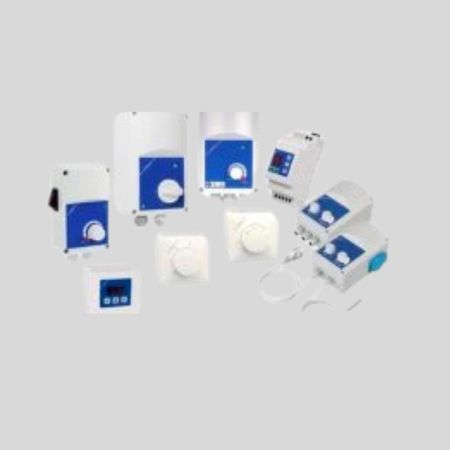
6. Not using a speed controller
Fans running at fixed maximum speed 24 hours a day waste energy and wear out prematurely. A speed controller with CO₂ or humidity sensor reduces consumption by 30–50% and extends equipment service life.
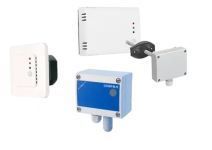
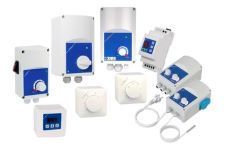
→ View speed controllers and HVAC sensors
How Much Does Hotel / Guesthouse Ventilation Cost?
The indicative budgets below cover equipment only (excluding installation labour):
Small guesthouse (8–15 rooms)
| Zone | Solution | Indicative equipment cost |
|---|---|---|
| Bathroom per room (×10) | Silent extractor with timer | 400–600 RON/unit = 4,000–6,000 RON |
| Floor corridor | Wall-mounted axial fan | 800–1,500 RON |
| Breakfast kitchen | Centrifugal canopy fan | 1,500–4,000 RON |
| Indicative total | 6,000–12,000 RON |
Mid-size hotel (20–50 rooms)
| Zone | Solution | Indicative equipment cost |
|---|---|---|
| Room bathrooms (×30) | Silent extractor with hygrostat | 500–800 RON/unit = 15,000–24,000 RON |
| Room ventilation (centralised) | 3–5 in-line fans | 3,000–8,000 RON |
| Floor corridors (×4) | Axial fans | 4,000–8,000 RON |
| Lobby + reception | Commercial heat recovery unit | 12,000–18,000 RON |
| Kitchen / restaurant | Separate system | 8,000–20,000 RON |
| Indicative total | 42,000–78,000 RON |
Installation labour typically represents 30–50% of equipment cost.
FAQ — Frequently Asked Questions
Is mechanical ventilation mandatory if the windows open?
Yes, for bathrooms without windows — natural ventilation is insufficient and uncontrollable. For rooms, natural ventilation may be accepted at 1–2 stars, but I5-2022 recommends controlled mechanical ventilation for all new structures.
Can a single fan serve multiple rooms?
Yes, via a duct network with distribution through adjustable dampers — a widely used solution for hotel corridors. Each branch must be fitted with a non-return damper to prevent odour migration.
What can I do with an old guesthouse that has no mechanical ventilation at all?
The quickest and most cost-effective solution: individual extractors in each bathroom, with direct connection through the external wall or through the ceiling into the roof space. No duct network required — installation takes 1–2 hours per room.
Do I need an authorised designer for hotel ventilation?
Yes, for structures requiring an ISU fire safety authorisation (more than 8 rooms or 16 beds), the installation design must be signed off by an authorised engineer. Ventilation.ro offers free technical consultancy for system sizing.
Are Casals fans suitable for continuous hotel use (24/7 operation)?
The professional Casals range is designed for continuous 24/7 operation. Motors have insulation class F and IP54–IP55 protection, suitable for high-humidity environments such as hotel bathrooms.
Conclusion
Proper ventilation in a hotel or guesthouse is not a cost — it is an investment with a direct return in reviews, occupancy rates and classification. A bathroom extractor with a silent motor and hygrostat costs 500–800 RON and can be the difference between a 4-star and a 3-star review on Booking.com.
Ventilation.ro stocks the right equipment for every zone of a hotel or guesthouse — from silent bathroom extractors to commercial heat recovery units for lobbies and complete HVAC control systems.
Request free technical consultancy or a quote for your project →
Related articles:
- Ventilation in Professional Kitchens and Restaurants
- Attic/Mansard Ventilation — Condensation, Heat and Stale Air
- Speed Controllers for Fans — Complete Guide
- I5-2022 vs I5-2010 — What Has Changed
- Commercial Heat Recovery Units
Sources: Standard I5-2022 (Order 173/2023), Standard NP 079-2002, ANT Order 65/2013 on classification of tourist accommodation structures (under revision — draft amending order in public consultation May–June 2026), P118-1:2025.


Post comment