


 Sales
Sales
























 My account
 View cart
Your Old Industrial Fans Consume as Much as Heavy Machinery. What It Costs You Per Year — and How to Stop It
Somewhere in your facility — on a wall, in the ceiling, above a production line — there is a fan that has been running for years. Maybe since the building was first fitted out. Nobody complains about it. It runs, it extracts air, it does its job. But silently, every single day, it is taking money out of your company account.
The Calculation Nobody Has Done for You
Let's take a concrete, conservative example: a wall-mounted axial fan with a 2.2 kW AC motor — one of the most common types in European industrial facilities. Running 16 hours per day, 5 days per week (a standard production schedule).
Annual electricity consumption: 2.2 kW × 16 h/day × 250 days/year = 8,800 kWh/year
Cost at current industrial electricity tariff (~€0.18/kWh): 8,800 × 0.18 = €1,584/year — for a single fan.
Does your facility have 6 fans like this? €9,504/year — purely on ventilation. Money that disappears without generating any value whatsoever.
And that is the optimistic calculation. An AC motor that has been running for 8–10 years is already operating at 70–80% of its nominal efficiency due to bearing wear and dust accumulation. The real consumption can be 20–30% higher than the nameplate figure.
Why Old AC Motors Consume So Much
A classic AC (asynchronous induction) motor has one fundamental characteristic: it runs at fixed speed, regardless of the actual ventilation demand. In summer, when the facility is hot and production is at peak — it runs at 100%. On Sunday night, when the building is empty — still at 100%. No modulation, no adaptation to real conditions.
It's the equivalent of driving on a motorway permanently stuck in first gear. It works, but the fuel consumption is enormous relative to what it needs to be.
What an EC Motor Does Differently
EC motors (Electronically Commutated) work on a fundamentally different principle:
30–50% lower consumption compared to an equivalent AC motor. Same airflow, same static pressure — using significantly less electricity.
Precise speed control via 0–10V signal or Modbus RTU. The fan connects to a temperature, CO₂ or humidity sensor and automatically adjusts its speed to real demand: slower at night, faster during peak production.
Soft start with no inrush current — extends the life of the electrical installation and reduces mechanical wear. Zero maintenance over the long term — no carbon brushes to wear out, no lubrication required.
Calculate Exactly What You Are Losing
Enter your facility's real data below. The calculator shows your actual annual cost and how long it takes to recover the investment in EC motors.
What EU Legislation Says
EU Regulation 327/2011 (ErP — Energy-related Products) sets mandatory minimum efficiency requirements for industrial fans. Motors below IE2 class have been illegal to place on the market in the EU since 2021. From July 2023, for power ranges between 75–200 kW, the minimum requirement rose to IE4.
If the fans in your facility are more than 8–10 years old, there is a high probability they operate below current standards. There is no immediate obligation to replace existing equipment, but any repair or replacement must use equipment that complies with current regulations. Furthermore, energy efficiency financing programmes — including EU funds available in 2025–2026 for SMEs — specifically target this type of investment.
EC Fans Available in Stock at ventilation.ro
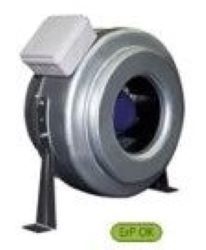
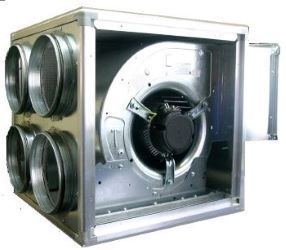
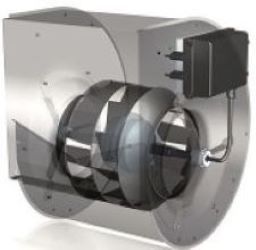
The EC motor fan range covers all industrial and commercial applications, with 24-hour delivery from stock in Bucharest:
Not sure where to start?
Tell us the power rating and number of fans in your facility. We'll calculate your savings together and recommend the right EC model — free of charge.


Post comment