










 Solutions KIT
 Sales
Sales

















 My account
 View cart
ErP 2026: The New European Fan Regulation Applies from 24 July — What Changes, What Disappears from the Market and What You Should Do Now
On 24 July 2026 — just days from now — Regulation (EU) 2024/1834, known in the industry as ErP 2026, becomes fully applicable. It is the most significant legislative change in the fan sector in 15 years: it completely replaces the old Regulation (EU) 327/2011 and substantially raises the minimum energy-efficiency thresholds for nearly all fans with an electric input power between 125 W and 500 kW sold in the European Union.
The practical consequence, in short: a significant share of the cheap, inefficient axial fans on today's market can no longer be legally placed on the EU market. Industry estimates suggest 35–40% of underperforming axial models will be phased out. If you are a designer, installer, industrial facility manager, or simply planning a fan purchase in the coming months, this article explains exactly what changes, who is affected, and what decisions you need to make before and after 24 July.
Why a new regulation was needed
The old Regulation 327/2011 (known as ErP 2013/2015) introduced the first minimum efficiency thresholds for fans, applied from 2013 and tightened in 2015. Technology has moved on since — EC motors, aerodynamically optimised impellers and electronic speed control became standard among serious manufacturers — while the legislation stood still for a decade.
The numbers explain the urgency: over 200 million regulated industrial fans operate in the EU, consuming electricity annually on a scale comparable to a country like Italy. Small fans below 125 W represent the vast majority of installed units but only a fraction of consumption — which is why regulation targets the 125 W – 500 kW range, where most of the energy, and therefore most of the potential savings, is concentrated.
ErP 2026 is part of the broader European Green Deal ecodesign package, alongside the new Energy Efficiency Directive (EU) 2023/1791 and the Ecodesign for Sustainable Products Regulation (EU) 2024/1781.
What actually changes from 24 July 2026
1. Stricter efficiency thresholds by fan type
The regulation sets differentiated minimum efficiency levels by construction type — axial, forward-curved centrifugal, backward-curved centrifugal, mixed-flow, cross-flow and jet fans — depending on electric input power and efficiency grade (N). The formulas are updated and thresholds raised versus 2015 levels.
Correction factors (multipliers of 0.85–0.9) apply to special categories: dual-use fans (daily ventilation + smoke extraction), low-noise fans and reversible fans.
2. The fan is assessed as a complete system
This is arguably the most important conceptual change. Under the old regulation, an assembler could combine a motor from one supplier and an impeller from another, relying on separately published component data. ErP 2026 defines the fan as a complete unit: motor + impeller + inlet cone/stator, assessed and documented as a whole. Whoever completes the fan and places it on the market becomes the "manufacturer" within the meaning of the regulation — with all associated compliance and documentation obligations.
For buyers this is good news: the efficiency figures on the datasheet will reflect the real performance of the assembly you receive, not a theoretical sum of components.
3. Far fewer exemptions
Under 327/2011, roughly half of the fans on the market benefited from exemptions. ErP 2026 drastically narrows the list. The most relevant example: dual-use smoke-extract fans — used daily for ventilation and only in fire events for smoke extraction — must now meet standard efficiency thresholds. Under the old regulation they were fully exempt.
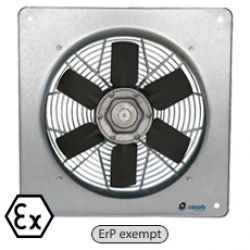
Only genuinely special categories remain out of scope: ATEX fans for explosive atmospheres, emergency-only fans (short-time operation) and a few other cases explicitly listed in the regulation.
4. Mandatory part-load performance information
An absolute first: manufacturers must publish performance data at partial loads and speeds, not only at the best efficiency point. For designers this is a major shift — in real installations fans spend most of their time below nominal duty, and efficiency in those regimes now becomes transparent and comparable. The EC fan + speed controller combination becomes even easier to justify with official figures.
5. Spare parts and repairability
In line with the new Ecodesign framework, the regulation introduces requirements on spare-part availability, maximum delivery times, and professional repairers' access to service information. One essential practical point: non-compliant spare part fans may still be sold until 24 July 2037, but under strict conditions — only to replace a corresponding fan placed on the market before 24 July 2026 and integrated into a product, and only where no compliant fan is fit to serve as a replacement. The product must carry the explicit labelling wording required by the regulation. Nobody forces you to scrap your current installation — but the spare-parts regime is not a general loophole for selling non-compliant products.
The full timeline — dates to remember
| Date | What happens |
|---|---|
| 3 July 2024 | Regulation (EU) 2024/1834 is adopted and published |
| 2 December 2025 | Regulation (EU) 2025/2481 brings technical clarifications (definitions, verification tolerances, transitional provisions) |
| 24 July 2026 | ErP 2026 fully applies to standalone fans placed on the market. 327/2011 is repealed |
| 24 July 2027 | Transition period ends for fans embedded in other equipment (air handling units, climate equipment etc.) |
| 24 July 2037 | Special regime for non-compliant spare part fans expires (allowed only to replace fans integrated into products and placed on the market before 24 July 2026, where no compliant replacement exists, with specific labelling) |
Key concept: the regulation applies to fans placed on the market from the respective dates. Installations already in operation need no mandatory retrofit, and stock legally placed on the market before the deadline may continue to be sold.
Who is affected and how
Manufacturers and importers carry the main responsibility: only compliant fans with CE marking and full documentation may be placed on the EU market — whether produced in Europe or imported from third countries. Cheap non-compliant imports are out.
Manufacturers of equipment with embedded fans (ventilation units, heat-recovery units, refrigeration equipment) get an extra year, until July 2027, but the Commission applies a cascading approach: the equipment manufacturer is responsible for the compliance of the fans inside.
HVAC designers must specify ErP 2026-compliant fans in all new projects and, in return, receive part-load data enabling far more precise sizing and realistic consumption calculations.
Installers and maintenance companies should know the spare-parts rule: replacing an identical fan in an existing installation remains legal with a properly labelled non-compliant product, until 2037.
End users — factories, warehouses, farms, commercial buildings — have no retrofit obligation, but a solid economic reason not to wait: replacing an inefficient fan with a compliant one can cut running costs by roughly 20% over the equipment's 15-year lifetime.
What ErP 2026 means for the Romanian market
The Romanian industrial fan market has for years been flooded with very cheap axial products using older-generation AC motors, with efficiency figures nobody verified. That is exactly the segment the new thresholds target. The predictable effects:
Gradual disappearance of non-compliant entry-level models. Anyone with ongoing projects specifying such products should urgently check their post-24-July availability — or order from stock placed on the market before the deadline.
Clear advantage for already-compliant European ranges. Serious manufacturers — Casals, Nicotra Gebhardt, Vent-Axia — adapted their ranges during the years of consultation preceding the regulation. EC motors, standard across more and more series, comfortably exceed ErP 2026 thresholds.
Documentation becomes a sales argument. Datasheets with part-load data, declarations of conformity and correct marking will separate genuine suppliers from intermediaries reselling undocumented imports.
Extra pressure on smoke-extraction projects. Combined with P118-1:2025 requirements, the inclusion of dual-use fans within ErP 2026 means specifying smoke-extraction equipment now requires verifying two compliance sets: fire certification (EN 12101-3) and energy efficiency.
What to do — checklist by role
If you have a purchase planned in the next 3–6 months: Check with your supplier whether the model is ErP 2026-compliant. If not, decide with full information: either order now from legally placed stock, or switch to the compliant model — usually with lower consumption and better total cost of ownership.
If you are a designer: Update your standard specifications: require compliance with Regulation (EU) 2024/1834 and part-load performance data. For dual-use smoke extraction, require both compliances explicitly.
If you manage existing installations: No replacement obligation. Still, inventory your critical fans and ask your supplier to confirm long-term spare-part availability — the 2037 rule protects you, but only if your supplier stays in the market.
If you sell or resell fans: Check the documentation of every model in your range. From 24 July, placing a non-compliant fan on the market (outside exemptions and the spare-parts regime) is illegal, and market surveillance authorities apply the verification procedures in the regulation's annex.
Why ventilation.ro is ready for ErP 2026
As a direct importer of European manufacturers who took part in the technical consultations for the new regulation, we work exclusively with ranges designed for the new requirements:
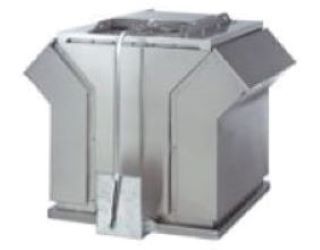
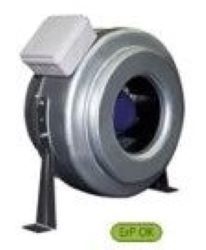
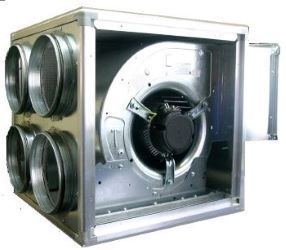
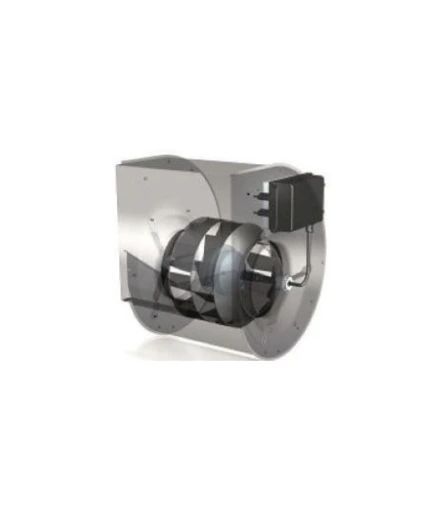
- EC-motor fans by Casals and Nicotra Gebhardt — efficiencies above ErP 2026 thresholds, integrated 0–10V control for part-load optimisation
- Complete documentation — CE declarations of conformity and technical datasheets with performance data for every product
- Free transition consultancy — send us the fan list from your project or installation and we will tell you which are compliant, which are being discontinued and what the direct replacements are
📞 +40 722 667 238 — free compliance check for your project 💬 WhatsApp — send your specification and get an answer the same day
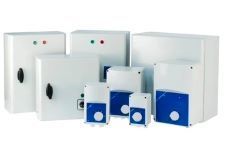
👉 EC-motor fans 👉 EC roof fans 👉 Speed controllers 👉 EC vs AC motors — how much you save
Frequently asked questions
Do I have to replace the fans in my existing installation? No. The regulation applies only to fans placed on the market from 24 July 2026. Installations in operation have no retrofit obligation, and their spare parts benefit from a special regime until 2037.
Can I still buy a fan after 24 July that doesn't meet the new thresholds? Yes, in two situations: if the product was legally placed on the EU market before 24 July 2026 (existing distributor stock), or — until 24 July 2037 — as a labelled spare part fan, strictly to replace a corresponding fan integrated into a product and placed on the market before 24 July 2026, where no compliant replacement is fit for the purpose.
Are ATEX fans covered by ErP 2026? No — fans for potentially explosive atmospheres remain exempt, as do emergency-only fans. Note, however: dual-use smoke-extract fans (also used for daily ventilation) are NO longer exempt.
What is Regulation 2025/2481? An amending regulation adopted in December 2025 clarifying definitions, transitional provisions, verification tolerances and fan-speed-related aspects. It changes neither the efficiency thresholds nor the timeline.
How do I verify whether a fan is compliant? Ask for the CE declaration of conformity and the datasheet: they must reference Regulation (EU) 2024/1834, the efficiency grade and the required performance data. If your supplier cannot provide them, that is a red flag.
Is an EC fan automatically ErP 2026-compliant? Not automatically, but in practice the vast majority of EC-motor fans from European manufacturers comfortably exceed the thresholds. Compliance is assessed on the motor + impeller + inlet cone assembly, so checking the documentation remains necessary.
Related articles: EC vs AC motors — energy efficiency · Regulation P118-1:2025 and smoke extraction · Quick industrial fan selection guide


Post comment