









 Solutions KIT
 Sales













 My account
 View cart
In winter, the same thing happens in many industrial halls and workshops: the extract fans are running, stale air is going out, but the air that replaces it comes in cold, through doors, windows and gaps. People freeze near the door, the heating runs non-stop, and sooner or later someone switches the ventilation off "so the hall doesn't get cold". That is when smoke, odours, condensation and stuffy air build up.
The answer is not to switch the ventilation off, but to supply heated fresh air: a fan draws in outdoor air, a filter cleans it and a hot water heating coil warms it before it enters the hall. Below we explain how such a system works, how to calculate the airflow and heating capacity, and which equipment you can use, with specific recommendations from our shop.
In short
- Winter ventilation should not be switched off: fresh air is supplied filtered and heated
- A system has 4 parts: fan, filter, hot water heating coil and controller
- Coil capacity is easy to calculate: 0.34 × airflow × temperature difference
- The hot water coils in our shop cover 10 to 180 kW and about 1,000 to 12,000 m³/h
- For a ready-made solution: OMNIBOX DD 10/10 with BAC 90 coil, for 7,000 m³/h
Contents
- Why the hall gets cold when you ventilate it in winter
- How a heated fresh air system works
- How to size the system, step by step
- Online calculator: airflow, capacity and seasonal cost
- How much does heating fresh air cost over a winter
- Which equipment you can use: our recommendations
- Want to pay even less? Heat recovery and air curtains
- Installation tips and frost protection
- Frequently asked questions
- Need to ventilate a hall or workshop? We help for free
Why the hall gets cold when you ventilate it in winter
Air does not disappear: whatever volume a fan extracts must be replaced. If there is no system to bring it in under control, the air finds its own way in: through doors, windows, frames and gaps. In winter, this air is at −5 or −10 °C.
The consequences show up quickly:
- cold draughts near doors and windows, where people can no longer work;
- the heating runs at full power and still can't keep up;
- the ventilation gets switched off, and welding fumes, paint vapours, odours or dust stay in the air;
- condensation on windows, on the roof sheeting and on machinery;
- doors and windows that are hard to open, because the hall is under negative pressure.
What does it cost? Just heating 3,000 m³/h of air from −10 °C to +18 °C takes about 28.5 kW of heat. You pay for that heat either way: you either bring it in under control, through a heating coil, or you pay for it through radiators struggling to keep up with the cold air coming in through the door – heat that doesn't even reach where it is needed.
How a heated fresh air system works
The air passes through four components, in this order:
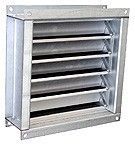
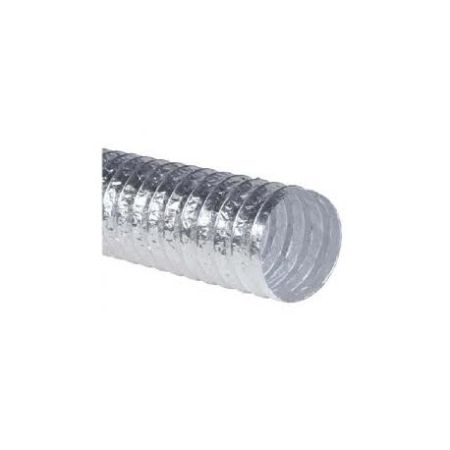
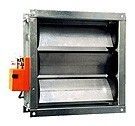
- Outdoor grille and damper – air is taken from outside, and the damper closes when the system is off.
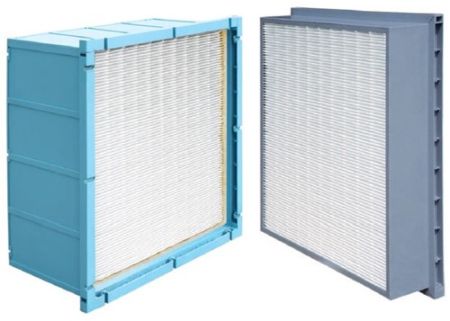
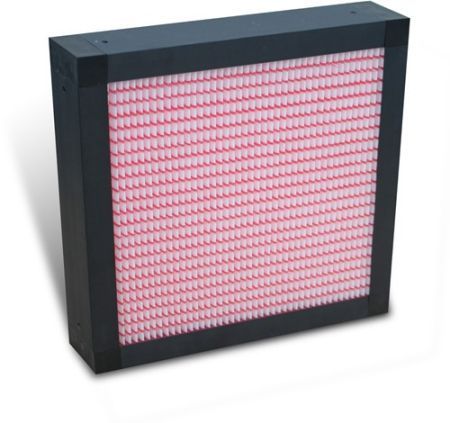
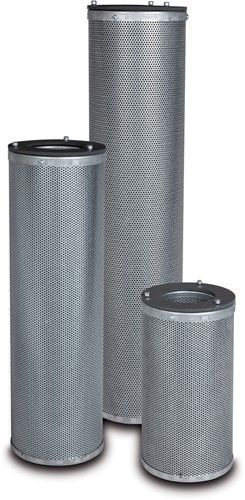
- Filter – stops dust and leaves and protects the heating coil. For halls and workshops, a G2–G4 filter is usually enough.
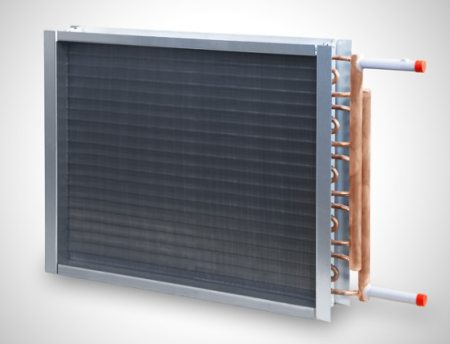
- Hot water heating coil – a copper tube heat exchanger with aluminium fins, through which water at 70–90 °C flows from a boiler or a district heating network. The air passes between the fins and warms up.
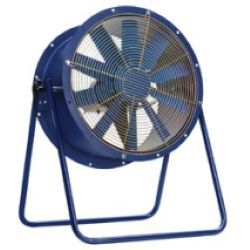
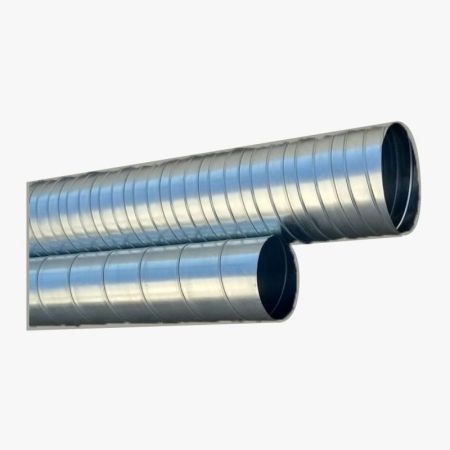
- Fan – a centrifugal fan that maintains its airflow even against the resistance of the filter and the coil. The warm air is then distributed through ducts and grilles into the hall.
On top of these comes the control system: a speed controller for the fan and, for the coil, a three-way valve that regulates the supply air temperature.
Why hot water and not electric? At the capacities a hall needs – tens of kilowatts – an electric heater would require a very large electrical connection and would be expensive to run. A hot water coil uses the heat source you already have: a gas boiler, a wood or pellet boiler, or district heating.
How to size the system, step by step
Faster: use the calculator. Enter the hall dimensions, the activity and the temperatures, and the calculator gives you the airflow, the heating capacity, the seasonal energy use and the matching equipment from our shop, with a quote request button.
Calculator: heated fresh air for your hall
Fill in the data to get the airflow, heating capacity, seasonal energy use and matching equipment from our shop.
Indicative calculation. Seasonal energy use assumes a mean winter outdoor temperature of +2 °C and a heat source efficiency of 90%. For exact sizing, ask us for a free check.
If you want to understand the calculation, here are the steps:
Step 1: fresh air flow rate
Airflow (m³/h) = hall volume (m³) × air changes per hour
Typical values:
| Space | Air changes per hour |
|---|---|
| Warehouse, storage hall | 1–2 |
| Production hall, mechanical workshop | 2–4 |
| Joinery workshop, car service | 4–6 |
| Paint shop, welding workshop | 6–10 or more, according to regulations |
| Sports hall | 3–5 |
If the hall already has extract fans or welding hoods, the fresh air flow must be at least equal to the extracted air flow. For welding workshops, see also our guide Welding workshop ventilation – regulations, airflows and mandatory equipment (in Romanian).
Step 2: heating capacity
Capacity (kW) = 0.34 × airflow (m³/h) × ΔT (°C) ÷ 1,000
ΔT is the difference between the desired supply air temperature and the outdoor design temperature. For most of Romania the design outdoor temperature is −15 °C; supply air can be heated to +16…+20 °C.
Step 3: choose the coil and the fan
Choose a coil whose nominal airflow is close to yours and whose capacity covers the demand. The fan must deliver the required airflow against the resistance of the filter, the coil and the ductwork; a centrifugal fan is the right choice for this.
Example 1: 300 m² mechanical workshop
Workshop of 20 × 15 m, 5 m high (1,500 m³), 2.5 air changes per hour:
- Airflow: 1,500 × 2.5 = 3,750 m³/h
- Capacity for −15 → +16 °C (ΔT = 31 °C): 0.34 × 3,750 × 31 ÷ 1,000 = approx. 40 kW
- Solution: the BAC 55 coil (55 kW, 4,000 m³/h) and a medium-pressure centrifugal fan of about 5,000 m³/h, for example the 5,000 m³/h configurator, which maintains its airflow against the resistance of the filter and the coil.
Example 2: 600 m² production hall
Hall of 30 × 20 m, 5 m high (3,000 m³), 2 air changes per hour:
- Airflow: 3,000 × 2 = 6,000 m³/h
- Capacity for −15 → +16 °C: 0.34 × 6,000 × 31 ÷ 1,000 = approx. 63 kW
- Solution: OMNIBOX DD 10/10 (7,000 m³/h, with reserve for the filter and coil) with the BAC 90 coil (90 kW, 7,000 m³/h) and a G2 filter – a ready-made combination that you configure directly on the product page.
These calculations are indicative. The actual coil output depends on the water temperature and the airflow; for your project, ask us for a free check.
How much does heating fresh air cost over a winter
The capacity calculated above is for the coldest day. On average, winter is milder: across most of Romania the mean temperature of the cold season is around +2 °C. For the hall in example 2 (6,000 m³/h, supply air at +16 °C), running 8 hours a day for 110 working days in the cold season:
| Indicator | Approx. value |
|---|---|
| Average heating load (+2 → +16 °C) | 28.6 kW |
| Thermal energy per season | 25,100 kWh |
| Consumption at the boiler (90% efficiency) | 27,900 kWh |
| With heat recovery (~70% recovery) | about 8,400 kWh |
In other words, a heat recovery unit can cut the energy used to heat fresh air by almost 20,000 kWh per season, and demand-controlled operation reduces it even further. The calculator above converts these figures into money, at your price per kWh.
Indicative values: actual consumption depends on climate, operating hours and system efficiency.
No time for calculations? Send us the hall dimensions, the activity and your heat source, and we will recommend the right fan, coil and filter for free.
Which equipment you can use: our recommendations
1. The ready-made solution: OMNIBOX DD 10/10 with BAC 90 coil
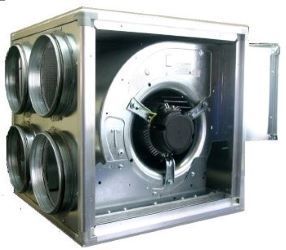
OMNIBOX DD 10/10 is a 7,000 m³/h double-inlet centrifugal fan mounted in an acoustic box. On the product page you configure it directly as a fresh air unit by choosing the accessories:
- the BAC 90 hot water heating coil – up to 90 kW, for 7,000 m³/h;
- the Z line G2 metal panel filter, 592 × 592 × 48 mm;
- the LG frequency inverter, for airflow control (the motor is three-phase);
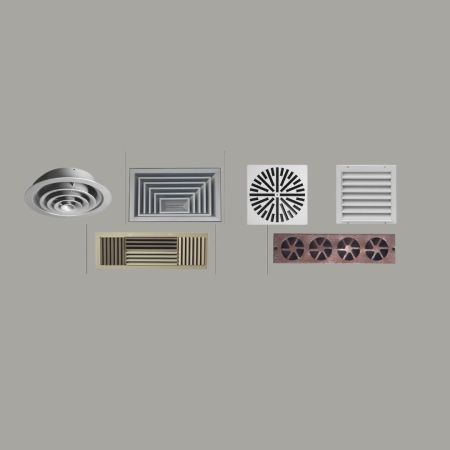
- the maintenance switch, grilles, ductwork and ceiling diffusers.
The result is a heated fresh air supply unit for halls of a few hundred square metres, with parts that fit together.
2. Hot water heating coils (70–90 °C)
All have a galvanised steel casing and a copper tube heat exchanger with aluminium fins, and can be ordered with or without an insulated plenum box with a circular flange.
| Coil | Max. capacity | Nominal airflow | Dimensions | Approx. air temperature rise* | Matching fan |
|---|---|---|---|---|---|
| BAC D10 | 10 kW | 1,080 m³/h | 760 × 217 mm | +27 °C | up to about 1,000 m³/h |
| BAC D15 | 15 kW | 1,900 m³/h | 1162 × 217 mm | +23 °C | about 2,000 m³/h |
| BAC 20 | 20 kW | 1,795 m³/h | 340 × 400 mm | +33 °C | about 2,000 m³/h, e.g. the 2,700 m³/h configurator |
| BAC D30 | 35 kW | 4,100 m³/h | 1200 × 300 mm | +25 °C | about 4,000 m³/h |
| BAC 55 | 55 kW | 4,000 m³/h | 530 × 500 mm | +40 °C | about 4,000 m³/h, e.g. the 5,000 m³/h configurator |
| BAC 90 | 90 kW | 7,000 m³/h | 630 × 700 mm | +38 °C | OMNIBOX DD 10/10, 6,000–8,000 m³/h configurators |
| BAC 120 | 120 kW | 11,000 m³/h | 910 × 980 mm | +32 °C | 11,000 m³/h configurator |
| BAC 180 | 178 kW | 12,000 m³/h | 850 × 1000 mm | +44 °C | 13,000 m³/h configurator |
*Calculated from the maximum capacity and nominal airflow on each product page, using the formula above. The actual value depends on the water and outdoor air temperatures.
How to read the table: for −15 °C outside and supply air at +16 °C you need a temperature rise of about 31 °C. The BAC 20, 55, 90, 120 and 180 coils cover it at nominal airflow; the D series coils are suitable for preheating or for areas with milder winters.
3. Fans
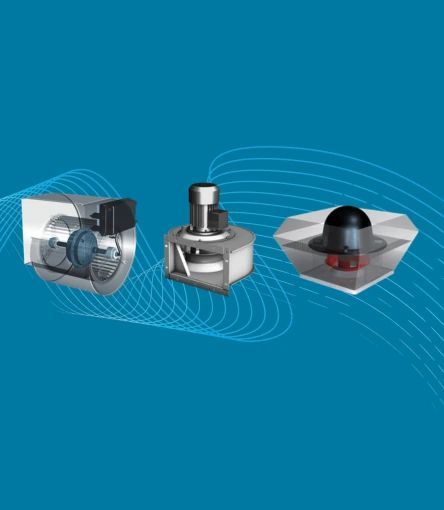
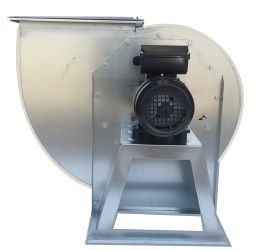
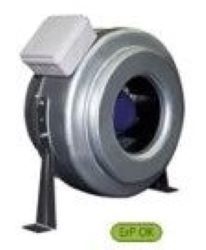
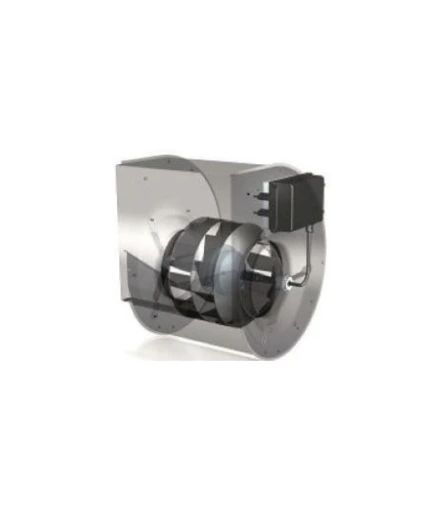
- Professional ventilation configurators, 2,700–14,500 m³/h – medium-pressure centrifugal fans that maintain their airflow with the filter and coil in the airstream. You configure them with ductwork, an acoustic box and a controller.
- OMNIBOX DD 10/10 – 7,000 m³/h, already in an acoustic box, with 6 or 8 spigots for distributing warm air to several zones.
- DD 9/9 M96R compact fan – 3,990 m³/h, single-phase 230 V, for small units with a low-resistance filter and coil.
4. Filters
- Z line G2 metal panel filter, 592 × 592 × 48 mm, available as an accessory for OMNIBOX.
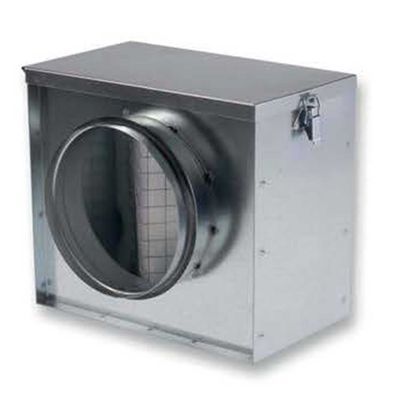
- Circular filter boxes with a G4 filter included: Ø300, Ø315 and Ø355.
- The full range of air filters.
5. Control and automation
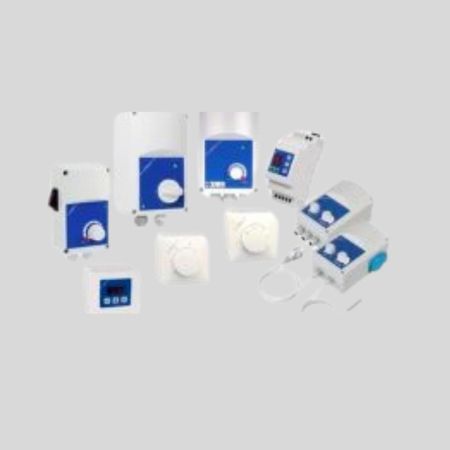
- Frequency inverters, for three-phase fans – fine airflow control and lower energy use.
- Linear speed controllers, for single-phase fans.
- Temperature, CO₂ and pressure sensors from the HVAC sensors category, so the system adjusts itself.
Want to pay even less? Heat recovery and air curtains
Heat recovery unit
The warm air you extract from the hall carries heat you have already paid for. A heat recovery unit transfers it to the incoming fresh air without the two airstreams mixing. The heating coil then has much less work to do, and the bill goes down.
Heat recovery pays off especially when the system runs many hours a day and the extract air is clean (no grease, solvents or abrasive dust). You will find models in the Heat recovery units – commercial range category, and sizing is explained in the guide What airflow does your heat recovery unit need? (in Romanian).
Air curtains for large doors
In halls with sectional doors or access doors that open often, the largest heat loss is through the door itself. An air curtain mounted above the door creates an air barrier that keeps the cold out while the door is open. You will find them in the Air curtains category.
Demand-controlled operation
You don't need maximum airflow all the time. With a frequency inverter and a CO₂ or air quality sensor, the fan runs slower when there are few people in the hall or the machines are off. Less supply air means less air to heat. Details are in our guide Demand-controlled ventilation (DCV) (in Romanian).
Installation tips and frost protection
- Install the filter upstream of the coil. Dust deposited on the fins greatly reduces heating output. Check and replace the filter regularly.
- Protect the coil against freezing. If the water isn't circulating and the outdoor air is at −15 °C, the coil can freeze and crack in a single night. Start the hot water circulation first and only then the fan, and when shutting down, stop the fan first; never leave the coil with the water off in a cold airstream.
- Fit a motorised or gravity damper at the air intake. When the system stops, the closed damper keeps cold air away from the coil.
- Control the temperature with a three-way valve. It meters the hot water through the coil so that the supply air always has the same temperature, however cold it is outside.
- Distribute warm air low down. Warm air rises. Use ducts and grilles that direct the air towards the working area, not towards the roof.
- Leave maintenance access to the filter, the coil and the fan.
Water temperature matters. The capacities in the table are for water at 70–90 °C. If the heat source is a heat pump, with water at 45–55 °C, the coil output drops considerably; in that case, choose a larger coil or ask us for a check.
Frequently asked questions
Why not simply switch the ventilation off in winter?
Because fumes, vapours, dust and moisture stay in the hall. Condensation, odours and stuffy air appear, and in welding or paint workshops ventilation is mandatory. The solution is to supply heated fresh air.
What heating capacity do I need?
Capacity (kW) = 0.34 × airflow (m³/h) × temperature difference (°C) ÷ 1,000. For example, heating 5,000 m³/h from −15 °C to +16 °C takes about 53 kW.
Can I use hot water from a gas boiler?
Yes. The coils are designed for hot water at 70–90 °C from a boiler or district heating. Just check that the heat source has enough capacity for the coil as well.
Does it work with a heat pump?
Yes, but with cooler water (45–55 °C) the coil output drops. Choose a coil larger than the calculation suggests or ask us for a check.
Which is better: a hot water coil or an electric heater?
For halls and workshops, where tens of kilowatts are needed, a hot water coil is usually much cheaper to run and doesn't require a very large electrical connection.
What is OMNIBOX with BAC 90 coil?
A 7,000 m³/h fresh air unit that you configure on the OMNIBOX DD 10/10 page: fan in an acoustic box, BAC 90 heating coil (up to 90 kW), G2 filter, frequency inverter and distribution accessories.
How do I protect the coil from freezing?
By starting the hot water circulation before the fan, fitting a damper at the air intake that closes when the system is off, and using a three-way valve that keeps the water circulating.
Need to ventilate a hall or workshop? We help for free
Send us the hall dimensions (length, width, height), the activity carried out there and your heat source. We will recommend the right fan, coil, filter and controls, with a complete quote.
Ask for a recommendation on WhatsApp → Send by e-mail →
- Phone: +40 722 667 238
- WhatsApp: +40 790 721 172
- E-mail: ioannina@ioannina.ro


Post comment