







 Solutions KIT
 Sales
Sales




 My account
 View cart
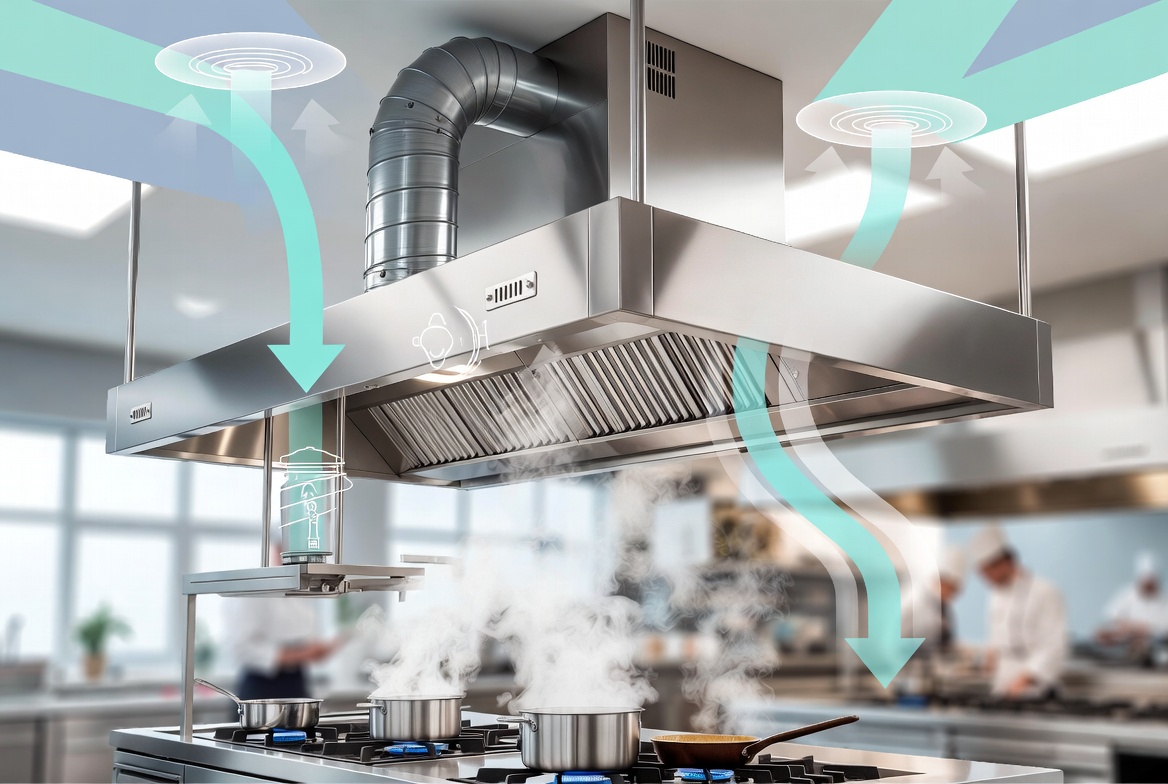 Ventilation in professional kitchens and restaurants — standards, airflow and equipment
Complete guide to professional kitchen ventilation: required airflow, EN 16282 standard, makeup air, recommended equipment. Common mistakes and solutions. ventilation.ro
If you are opening or planning to open a restaurant, canteen, café or any other catering establishment, kitchen ventilation is one of the investments with the greatest impact on daily operations — and one of the most frequently overlooked at the design stage. An incorrectly sized system means chefs working at 35°C in summer, odours reaching the dining room, grease deposits in ducts that become a fire risk, and a health inspection that closes you down.
This guide explains everything you need to know: how many m³/h of air you actually need, what the applicable European standard says, why makeup air is as important as extraction, and what equipment genuinely works in a professional kitchen.
Why the professional kitchen is the most demanding space to ventilate
An active professional kitchen simultaneously generates four categories of pollutants that ventilation must manage:
Heat and steam — a professional gas range dissipates 10–15 kW into the air. A complete cooking line with fryers, grill and oven can generate 50–100 kW of sensible heat that accumulates under the ceiling within minutes without adequate extraction. Temperature at staff level can exceed 38–40°C at peak season.
Airborne grease — frying and grilling generate grease aerosols that deposit on ducts, fan motors and the building structure. A fan without adequate filters becomes clogged with grease within months and presents a serious fire risk.
Odours — gastronomic volatiles are not dangerous, but if they reach the dining room they destroy the customer experience. Nobody wants to smell the fryer at a dinner table.
Carbon monoxide and combustion gases — gas-fired kitchens produce CO and CO₂ that must be eliminated quickly. Sanitary regulations impose maximum concentrations and minimum fresh air requirements per person.
European standard EN 16282 — the reference document
The European standard EN 16282:2017 (Equipment for commercial kitchens — Components for ventilation in commercial kitchens) is the technical reference document for designing ventilation in professional kitchens. It came into force in 2017 after 14 years of development and harmonises requirements for the entire ventilation path — from the hood to the final roof exhaust.
Key EN 16282 requirements relevant to owners and designers in Romania:
Applicability: the standard applies mandatorily to kitchens with installed cooking equipment power above 25 kW. Below this value, the requirements are recommended rather than imposed.
Flow separation: extraction air from the kitchen cannot be recirculated to the dining room or other spaces — it must be fully discharged to outside.
Grease filtration: every extraction installation must include lamella grease filters with a minimum grease separation efficiency of 82% (measured to EN 16282-8). Filters should be cleaned weekly or more frequently in high-activity kitchens.
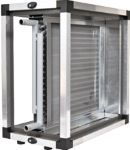
Heat recovery: the standard recommends the use of heat recovery units to preheat makeup air, with a minimum thermal efficiency of 73% — a requirement that significantly reduces energy costs in kitchens operating more than 8 hours per day.
How many m³/h do you need? The correct calculation for your kitchen
Calculating airflow for a professional kitchen is more complex than for an office or industrial hall, because it depends not only on the volume of the space but also on the type and power of the cooking equipment.
Simplified method — air changes per hour
As a quick estimate for the concept phase:
| Kitchen type | Air changes/hour |
|---|---|
| Café / snack bar (light cooking) | 15–20 |
| Small–medium restaurant (30–80 covers) | 20–30 |
| Large restaurant / canteen (over 80 covers) | 30–40 |
| Fast food, multiple fryers | 40–60 |
| Hotel kitchen or industrial catering | 40–60 |
Practical example — 60-cover restaurant:
- Kitchen floor area: 40 m²
- Ceiling height: 3.2 m
- Volume: 40 × 3.2 = 128 m³
- Required air changes: 25/hour
- Total required airflow: 128 × 25 = 3,200 m³/h
Add 20% safety margin: design airflow = 3,840 m³/h
Rigorous method — based on equipment power (EN 16282)
The precise EN 16282 method calculates airflow based on the thermal output of each piece of equipment and the type of canopy (local or ceiling-integrated). This is the method used by designers in the technical report for planning permission.
General rule: 1 kW of cooking equipment power → 80–150 m³/h extraction airflow (variable depending on equipment type and canopy configuration).
Makeup air — the number one mistake in kitchen ventilation
Extraction without makeup air is like pumping water out of a sealed bottle — at best it works poorly, at worst it doesn't work at all.
If a fan extracts 3,000 m³/h from the kitchen, those 3,000 m³/h must enter from somewhere. Without a makeup air supply system, the kitchen goes into negative pressure — air forces its way in through any available gap: doors, windows, service penetrations, structural voids. The consequences are multiple and all unpleasant:
- Canopy hoods stop working — uncontrolled makeup air current distorts the extraction flow and grease and steam escape into the kitchen
- Odours migrate to the dining room through open doors (the warm air from the dining room is "drawn in" by the kitchen's negative pressure)
- Doors become hard to open or slam on their own
- Staff feel cold draughts at ankle level in winter
The solution: installing a makeup air supply system that delivers to the kitchen a volume of air equal to 85–90% of the extraction volume. The 10–15% difference maintains a slight negative pressure relative to the dining room — desirable, to prevent odour migration.
Makeup air can be supplied:
- Directly through the canopy (hoods with integrated supply) — the most technically efficient solution
- Through ceiling grilles at the periphery of the kitchen
- Through textile diffusers at ceiling level (in large kitchens)
The right ventilation equipment for a professional kitchen
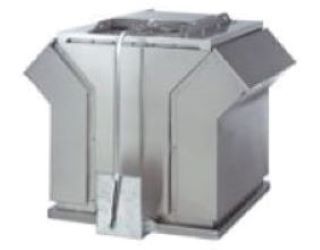
The extraction fan — centrifugal, not axial
The first rule of professional kitchen ventilation: the extraction fan must be centrifugal, not axial.
An axial fan installed on a duct running through a false ceiling, passing through several bends and exiting on the roof, will deliver 30–40% of its nominal airflow at the actual static pressure of the installation. A kitchen installation typically has 200–500 Pa static pressure (long ducts, grease filters, external grilles) — axial fans cannot cope.
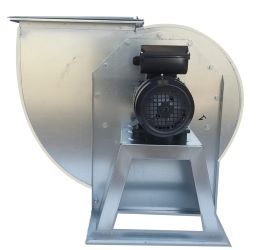
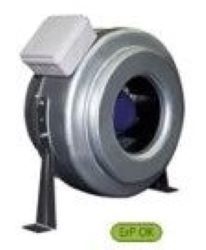
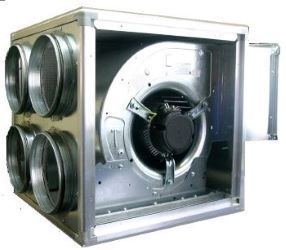
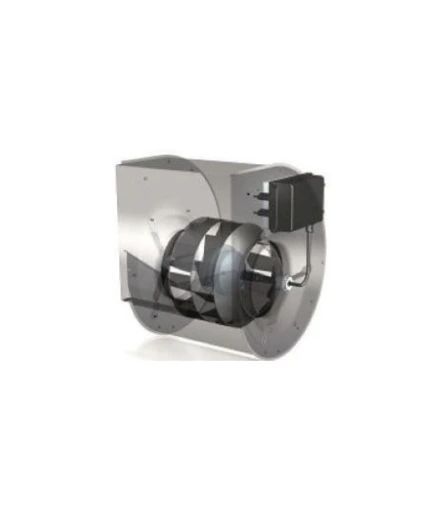
Centrifugal fans deliver 300–800 Pa static pressure and maintain nominal airflow even through complex installations. Casals fans in the MBP and MDI ranges have the additional advantage of grease resistance — the casing and rotor withstand grease deposits without performance degradation and are straightforward to clean.
👉 Medium-pressure centrifugal fans — for kitchen extraction
Resistance to high temperatures
Air extracted from an active kitchen can reach 60–80°C at the canopy level. Any fan installed on the extraction path must withstand this temperature in continuous operation.
Always check the maximum declared air temperature in the technical data sheet. Standard IP55 motors support 40°C transported air temperature — insufficient for direct extraction. Casals MDI models (AISI 304 stainless steel) support up to 130°C and are suitable for installations where the fan is mounted in the hot air path.
👉 AISI 304 stainless steel centrifugal fans — Casals MDI
When is an ATEX fan mandatory in a gas kitchen
Kitchens with natural gas or LPG cooking equipment require an ATEX zone assessment adjacent to the equipment. Although an active kitchen is not generally classified as a continuous ATEX zone (Zone 0 or 1), areas immediately adjacent to gas valves and connections may be classified as Zone 2 — low probability of explosive atmosphere.
If the kitchen's technical design classifies any area as ATEX Zone 2, fans in that zone must be ATEX II3G certified. Using a standard fan in an ATEX-classified zone is illegal and presents an explosion risk in the event of a gas leak.
Consult the gas installation designer for the exact ATEX zone classification in your kitchen.
👉 ATEX certified fans — complete range
The makeup air supply fan
Makeup air introduced into the kitchen is not raw outdoor air — particularly in winter it must be preheated to avoid discomfort for staff. Options are:
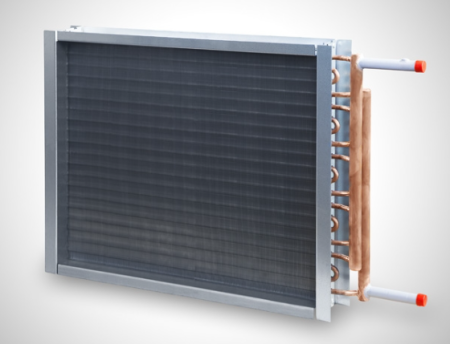
Electric or hot-water heating coil on the supply duct — standard solution, simple to implement.
Heat recovery unit between the extracted and supply air — more energy-efficient solution, recommended by EN 16282 for intensively operated kitchens. Recovery efficiency of 70–80% significantly reduces the cost of winter air preheating.
👉 Heat recovery units — commercial range 👉 Heating coils
Grilles and diffusers for the dining room
The dining room has different requirements from the kitchen: low noise level, uniform air distribution without perceptible draughts, aesthetics integrated into the restaurant design.
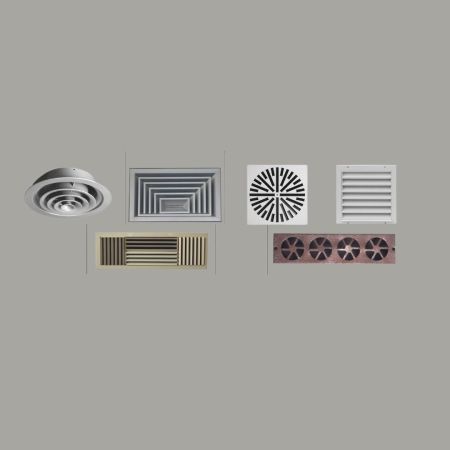
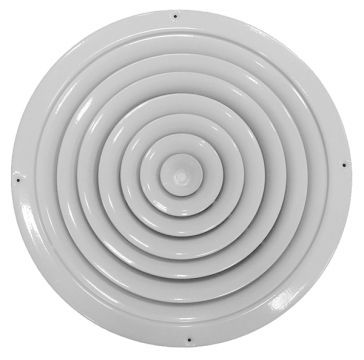
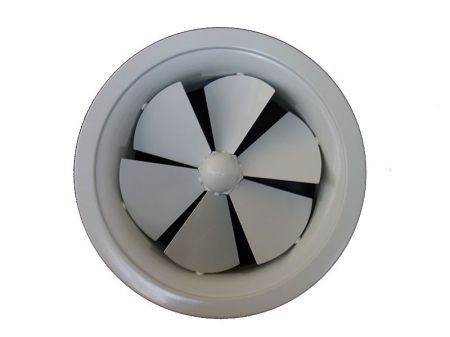
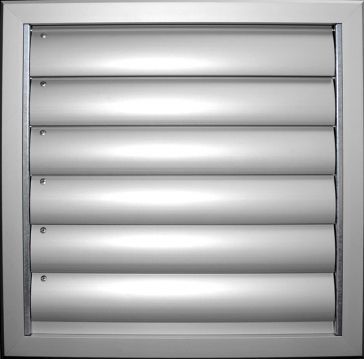
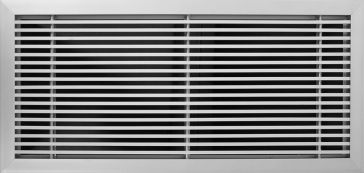
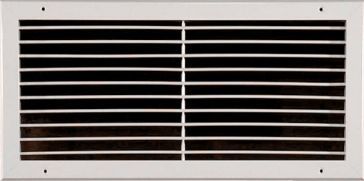
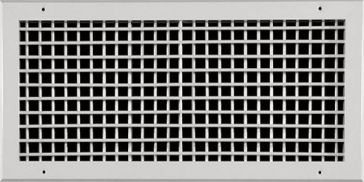
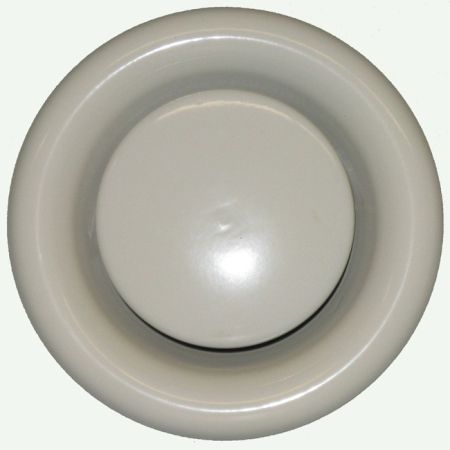
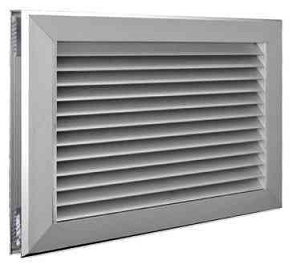
Double-deflection anodised aluminium grilles allow precise directional control of the airflow and integrate elegantly into any ceiling finish. Swirl diffusers ensure uniform air mixing without perceptible draughts at table level.
👉 Double deflection anodised aluminium grilles 👉 Swirl diffusers
Ventilation control — fixed or variable?
Fixed airflow operation (fan on/off or single speed) is the simplest and cheapest initial solution, but also the most expensive in use: the kitchen operates at 30% capacity in the morning, but the fan extracts the same amount as at peak hour.
Variable airflow operation (VRV — Variable Rate Ventilation) adjusts the extraction flow based on actual kitchen activity, either through:
- Temperature sensors on the extraction path — the fan speeds up as temperature rises
- CO₂ or CO sensors for gas-fired kitchens
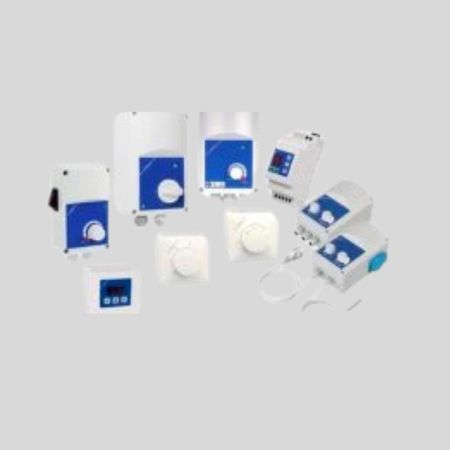
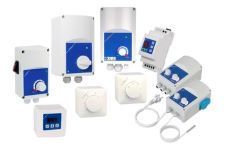
- Speed controllers with 0-10V signal connected to kitchen automation
Reducing airflow to 50% of nominal during low-activity periods (mornings, between services) reduces ventilation energy consumption by up to 60% — due to the cubic law of power in fan systems.
👉 Linear speed controllers 👉 Multifunctional HVAC sensors
The 6 classic mistakes in professional kitchen ventilation
1. Fan undersized for the cooking equipment power. The most common. The owner saves on the fan, the installer fits what was purchased, the kitchen becomes an oven. Result: chefs who leave after three months and odour complaints from the dining room.
2. Axial fan on a long duct with bends. An axial wall fan on an 8-metre duct with two bends and a grease filter simply doesn't work — it delivers 20–30% of nominal airflow. A centrifugal fan is mandatory for any ducted installation.
3. No makeup air. The kitchen goes into negative pressure, hoods stop working correctly, odours reach the dining room. Extraction without equivalent supply is ineffective by definition.
4. Standard fan in an ATEX-classified zone. Gas kitchens require a risk assessment. If ATEX zones exist, a standard fan becomes an explosion hazard.
5. Fan motor in the hot air path. Standard AC motors support 40°C transported air temperature. On extraction from the canopy, air reaches 60–80°C. The motor fails within 6–12 months. Use models with declared thermal resistance or with the motor positioned outside the airstream.
6. No grease filters or uncleaned filters. Grease deposited in ducts ignites. Health and fire safety regulations require lamella metal filters and a documented cleaning programme. An unfavourable health inspection on this basis can suspend operations.
What airflow do you need for the dining room?
The kitchen is not the only space requiring ventilation. The dining room has separate requirements:
| Unit type | Air changes/hour (dining) | Notes |
|---|---|---|
| Classic restaurant | 8–12 | No smokers |
| Bar / active pub | 12–15 | High traffic, possible external smokers |
| Fast food | 10–15 | High traffic, rapid turnover |
| Café | 6–10 | Lower activity |
The dining room must be maintained at slight positive pressure relative to outside, to prevent cold air infiltration in winter and to prevent odour migration from the kitchen — which is at negative pressure.
Summary — equipment you need for a restaurant
| Component | Recommended type | Category on ventilation.ro |
|---|---|---|
| Kitchen extraction fan | Centrifugal, stainless or grease-resistant plastic | Medium-pressure centrifugal |
| Makeup air supply fan | Centrifugal or axial (low pressure) | Axial wall fans |
| Grease filters | Lamella metal (mandatory EN 16282) | Integrated in canopy |
| Preheat coil | Electric or hot water | Heating coils |
| Dining room grilles | Anodised aluminium, double deflection | Double deflection grilles |
| Speed controller | Linear or 0-10V signal | Speed controllers |
| ATEX certification | Mandatory for gas kitchens if zones classified | ATEX fans |
Free consultancy for your project
Every restaurant is different — the menu, equipment, floor area, spatial configuration and number of covers all influence system sizing. If you are in the design or renovation phase and don't know where to start, the ventilation.ro team can assist with airflow calculations and equipment recommendations.
📞 +40 722 667 238 — free technical consultancy 🌐 ventilation.ro/en/category/356/bucatarii-profesionale.html — complete HoReCa range
Relevant also for: Commercial ventilation · Centrifugal fans · ATEX fans · Airflow calculator


Post comment