


 Sales
Sales
























 My account
 View cart
Date: 06 May 2026
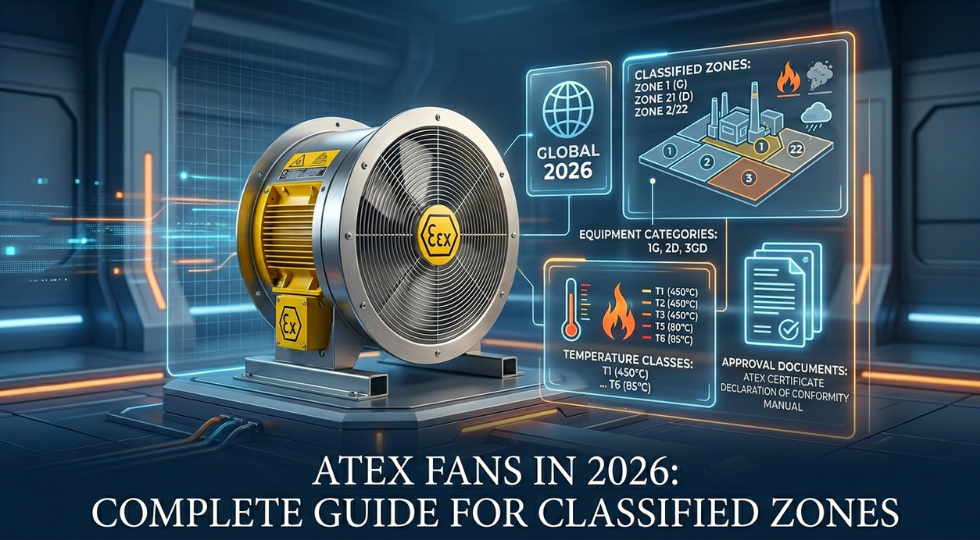 ATEX Fans in 2026 — Complete Guide: Hazardous Zones, Categories, Temperature Classes and Approval Documents
Do you have a project in petrochemicals, food processing, a refinery, solvent storage or an LPG station and need to specify ventilation for classified zones? Or are you a safety engineer checking whether existing equipment is compliant? This guide covers everything you need to know: what ATEX is, how hazardous zones are classified, which fan category to choose for each zone, how to read the Ex marking and what documents are required for installation approval.
What ATEX is and why it is mandatory
ATEX (from French ATmosphères EXplosibles) is the European regulatory framework governing equipment used in potentially explosive atmospheres. In Romania, ATEX is transposed through two separate legislative acts with different responsibilities:
Government Decision 245/2016 transposes Directive 2014/34/EU (ATEX 95) — governs equipment manufacturers. Defines the technical requirements an ATEX fan or other electrical/mechanical equipment must meet to be used in hazardous areas. Every ATEX fan sold in Romania must be certified by an independent notified body and carry the CE marking accompanied by the Ex marking.
Government Decision 1058/2006 transposes Directive 1999/92/EC (ATEX 137) — governs employers and installation operators. Establishes the obligation to classify hazardous zones within the installation, to produce the Explosion Protection Document (EPD) and to use only equipment certified to the appropriate level for the zone in which it is installed.
The practical consequence: installing an uncertified ATEX fan in a classified zone makes the employer criminally and civilly liable in the event of an accident. The manufacturer or distributor that supplied non-compliant equipment is jointly liable.
Zone classification — the first step in any ATEX project
Before selecting a fan, the zone in which it will be installed must be known. Classification is the responsibility of the employer/operator, not the ventilation designer. Zones are defined based on the frequency and duration of explosive atmosphere presence.
Zones with flammable gases and vapours
Zone 0 — Explosive atmosphere of gas, vapour or mist is present continuously or for long periods (more than 1,000 hours/year). Examples: inside a fuel tank, inside a petrochemical process vessel. Required equipment: Category 1G. Rarely applicable to ventilation fans.
Zone 1 — Explosive atmosphere is likely to occur occasionally during normal operation (10–1,000 hours/year). Examples: areas immediately adjacent to process vents, around pumps and compressors, flanges, poorly ventilated enclosed spaces. Required equipment: Category 2G.
Zone 2 — Explosive atmosphere does not occur during normal operation or occurs rarely and briefly (under 10 hours/year). Examples: inside bunds around tanks, areas remote from sources of release. Required equipment: Category 3G (or the more restrictive 2G/1G, also acceptable).
Zones with combustible dust
Zone 20 — Combustible dust cloud present continuously or frequently. Examples: inside processing equipment (silos, mixers). Equipment: Category 1D.
Zone 21 — Combustible dust cloud present occasionally during normal operation. Examples: immediate area of silo filling/emptying, dust filters, conveyors. Equipment: Category 2D.
Zone 22 — Combustible dust cloud does not occur during normal operation or occurs rarely and briefly. Examples: area adjacent to equipment with dust leakage potential, bulk powder storage. Equipment: Category 3D (or more restrictive).
How to choose the fan category for your zone — quick reference table
| Zone | Atmosphere type | Required fan category | Minimum Ex marking |
|---|---|---|---|
| Zone 0 | Gas/vapour, continuous | 1G | Ex ia, Ex ma |
| Zone 1 | Gas/vapour, occasional | 2G | Ex d, Ex e, Ex p |
| Zone 2 | Gas/vapour, rare | 3G or 2G | Ex n, Ex e |
| Zone 20 | Dust, continuous | 1D | Ex ia D, Ex ma D |
| Zone 21 | Dust, occasional | 2D | Ex tb, Ex mb |
| Zone 22 | Dust, rare | 3D or 2D | Ex tc, Ex tb |
The basic rule: you can install equipment from a more restrictive (safer) category than the minimum required, but never a less restrictive one. A Category 2G fan can be installed in both Zone 1 and Zone 2, but a Category 3G fan can only be installed in Zone 2.
How to read the Ex marking — complete decoding
On the nameplate of any certified ATEX fan you will find a marking such as:
II 2G Ex e IIB T3 Gb
Here is what each element means:
II — Equipment group: I = mines (firedamp), II = surface (all industrial installations outside mines). Virtually all industrial fans are Group II.
2G — Category and atmosphere type: 2 = Category 2 (Zone 1 and 2), G = Gas (Zones 0/1/2). D = Dust (Zones 20/21/22).
Ex — General explosion protection marking to EN 60079 standards.
e — Protection type Ex e = Enhanced Safety: constructively does not produce sparks or arcs in normal operation. The most common protection type for industrial fans. Others common: d = flameproof enclosure, p = pressurisation, n = type n (Zone 2 only).
IIB — Gas subgroup: IIA = lower risk gases (propane, methane), IIB = medium risk gases (ethylene, hydrogen sulphide), IIC = highest risk gases (hydrogen, acetylene). A fan marked IIB can also be used with IIA gases (less hazardous) but not with IIC.
T3 — Temperature class: the maximum surface temperature of the equipment at which it can operate without igniting the surrounding explosive atmosphere:
| Class | Max. surface temperature | Typical gases/vapours |
|---|---|---|
| T1 | 450°C | Methane, acetone |
| T2 | 300°C | Ethanol, diethyl ether |
| T3 | 200°C | Petrol, diesel, H₂S |
| T4 | 135°C | Acetaldehyde, diethyl ether |
| T5 | 100°C | Carbon disulphide |
| T6 | 85°C | Nitrobenzene |
The rule: the auto-ignition temperature of the gas present in the installation must be higher than the maximum surface temperature of the equipment. A T3 fan (max 200°C surface) is safe with petrol (auto-ignition ~280°C) but not with acetaldehyde (auto-ignition ~175°C — requires T4).
Gb — Equipment Protection Level (EPL): Ga = very high protection (Zone 0), Gb = high protection (Zone 1), Gc = enhanced protection (Zone 2). Introduced by EN 60079-0:2012, progressively replacing the older classification.
Typical applications in Romania and what fan to choose
Petrochemicals and refineries
Typical zones: Zone 1 and Zone 2 for hydrocarbon gases (IIA, IIB), Zone 0 possible inside vessels. Required fan: Category 2G, Ex e or Ex d, Subgroup IIB (covers IIA too), T3 or T4.
Food industry — flour, sugar, starch dust
Typical zones: Zone 21 and Zone 22 for organic combustible dust. Required fan: Category 2D or 3D, Ex tb (Zone 21) or Ex tc (Zone 22). Special attention: sugar and starch dust have extremely low minimum ignition energy — requirements equivalent to IIB for gases. Check the ATEX documentation for the specific dust.
LPG stations and fuel distribution
Typical zones: Zone 1 (around dispensing pumps), Zone 2 (extended zone). Required fan: Category 2G, Ex e, IIA (propane/butane), T1 or T2.
Paints, coatings, organic solvents
Typical zones: Zone 1 and Zone 2 for solvent vapours (ethyl acetate, toluene, xylene). Required fan: Category 2G, Ex e or Ex d, IIA or IIB depending on solvent, T3 or T4.
Chemical and pharmaceutical production
Typical zones: variable — requires installation-specific classification. Frequently Zone 1 with extended Zone 2. Required fan: Category 2G, Ex e or Ex d, subgroup determined by specific process gases.
Documents required for ATEX installation approval
Any installation with classified zones must have, per GD 1058/2006:
1. Explosion Protection Document (EPD)
The primary document attesting that the employer has fulfilled explosion risk assessment obligations. Must contain: identification and assessment of explosion risks, prevention measures, zone classification, list of equipment used in classified zones with their certifications, organisational measures.
2. CE Declaration of Conformity of the fan
Issued by the fan manufacturer, specifying the EN 60079 standards applied, the notified body that performed the certification, the ATEX certificate number.
3. ATEX certificate from notified body
Issued by an independent notified body (e.g. PTB Germany, INERIS France, CNBOP Poland, INSEMEX Romania). The certificate number must be visible on the fan nameplate and in the technical documentation.
4. Technical data sheet with complete Ex marking
The fan's technical data sheet must contain the complete Ex marking, maximum surface temperature, temperature class, gas subgroup, EPL level, reference standards.
Why this matters for you: ventilation.ro supplies for all ATEX fans in its catalogue: CE Declaration of Conformity, ATEX certificate with notified body number and complete technical data sheet with Ex marking — all documents required directly usable in the EPD and ISU/ISCIR approval file.
Common mistakes in ATEX ventilation design
Mistake 1 — Choosing the gas subgroup without specific verification
Many designers automatically select subgroup IIB (medium) for any petrochemical installation. This is conservative but not always correct: hydrogen installations (IIC) specifically require IIC-marked equipment. Always check the substance Safety Data Sheet for the specific ATEX subgroup.
Mistake 2 — Ignoring surface temperature when selecting temperature class
The most common cause of non-compliance in ATEX audits. T3 (max 200°C) is sufficient for petrol and diesel but not for aldehydes, acetylene or carbon disulphide. Check the auto-ignition temperature in the SDS and choose a T class with a maximum temperature below it.
Mistake 3 — Installing a non-ATEX fan outside the classified zone on a duct that passes through it
A fan mounted outside a classified zone on a duct passing through Zone 1 may draw or discharge explosive gases. If the explosive atmosphere can reach the motor via the air duct, the fan must be ATEX-certified to the appropriate level.
Mistake 4 — Using a Zone 2 ATEX fan in Zone 1
Category 3G fans (e.g. marking II 3G) are certified for Zone 2, not Zone 1. Using them in Zone 1 invalidates the certification and creates genuine risk under abnormal operating conditions.
Mistake 5 — Missing documentation at delivery
An ATEX fan without a CE Declaration of Conformity and notified body certificate cannot be included in the EPD and cannot be legally used in classified zones, regardless of technical compliance. Always request complete documentation at delivery.
Why over 200 ATEX models in stock — what the ventilation.ro range covers
As direct importer of Casals Ventilación and Nicotra Gebhardt, ventilation.ro supplies ATEX fans from ranges covering:
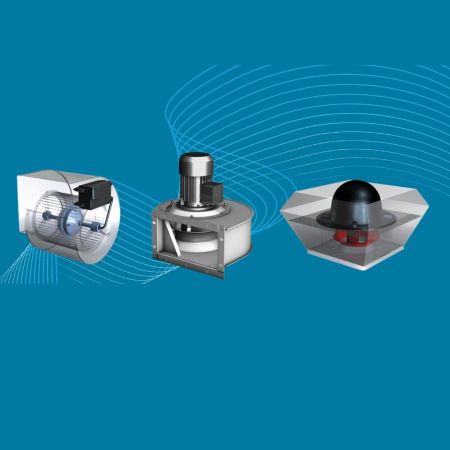
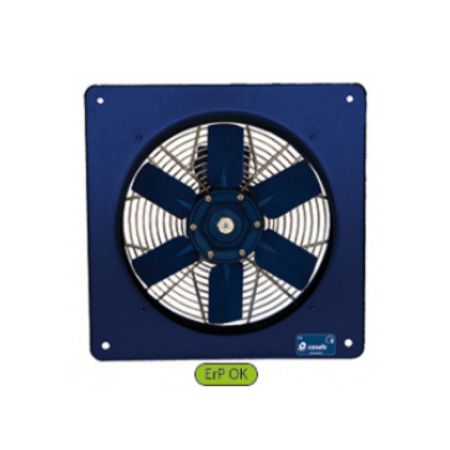
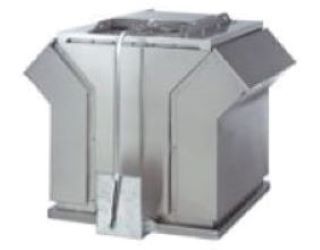
Axial ATEX fans — for general hall and Zone 2 space ventilation, wall and roof fans, in Ex e and Ex n versions, subgroups IIA and IIB, classes T1–T4.
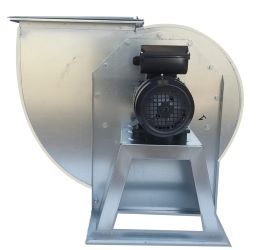
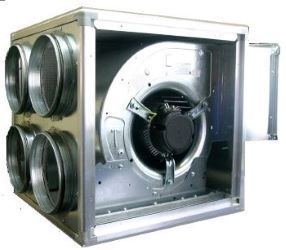
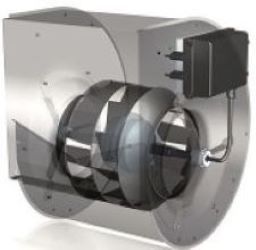
Centrifugal ATEX fans — for higher static pressure systems (ducted installations, localised extraction), available single-phase and three-phase, Ex e and Ex d.
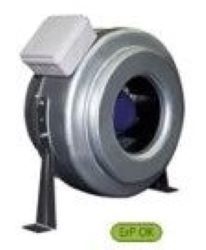
Inline duct ATEX fans — for inline installations in classified zones or on ducts traversing classified zones.
All models supplied with:
- CE Declaration of Conformity
- ATEX certificate from notified body (certificate number on nameplate)
- Technical data sheet with complete Ex marking
- ATEX-specific installation and maintenance manual
Local stock — 24–48h delivery without import lead times, essential for projects with tight deadlines or urgent replacements in existing installations.
👉 ATEX fans — complete range 191 models 👉 Axial ATEX wall fans 👉 Centrifugal ATEX fans
📞 +40 722 667 239 — free technical consultancy for ATEX model selection for your zone. Tell us the zone (1 or 2), the gas or dust present and the required airflow — we recommend the correct model with complete documentation.
FAQ — ATEX Fans
Can I use a standard IP55 motor fan in Zone 2 instead of an ATEX fan? No. IP55 is protection against mechanical dust and moisture — it has no relation to explosion protection. A standard IP55 motor can generate internal electrical sparks or reach surface temperatures that can ignite an explosive atmosphere. Zone 2 requires at minimum Category 3G with appropriate Ex marking.
Who classifies the zones in my installation? Under GD 1058/2006, zone classification is the responsibility of the employer (installation operator), not the designer or equipment supplier. Classification is typically performed by an ATEX-accredited specialist (specialist body or engineer with ISCIR/INSEMEX attested competence).
Does an ATEX fan also need periodic inspection? Yes — under GD 1058/2006 and standard EN 60079-17, equipment in classified zones must be inspected periodically (visual, close and detailed) according to a documented programme. Frequency depends on equipment type and environmental conditions (minimum annual for visual inspection).
Are there ATEX fans for both dust and gas simultaneously? Yes — models with dual marking exist, e.g. II 2GD or II 2G/2D — certified for both gases (G) and combustible dust (D). Used in installations where both explosive atmosphere types may be present simultaneously (e.g. chemical industry with solvents and reactive dust).
How much more does an ATEX fan cost than a standard fan? The price difference varies by power and protection type: Ex e costs 30–80% more than the standard equivalent, Ex d costs 80–150% more. The additional cost is justified by independent notified body certification, special materials and stricter manufacturing tolerances.
Related articles: P118/1-2025 standard — smoke extraction and fire safety · EC motors vs AC motors — energy efficiency · Airflow calculator


Post comment