








 Solutions KIT
 Sales
Sales








 My account
 View cart
Welding Workshop Ventilation — Mandatory Regulations, Airflow Calculations & Equipment 2026
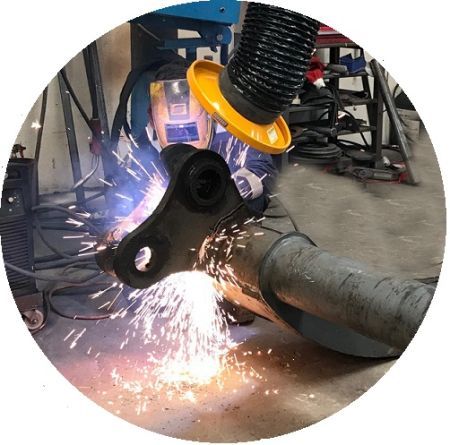
Welding fume is one of the most dangerous industrial air pollutants. It contains fine metal particulates (manganese, hexavalent chromium, nickel), ozone, nitrogen oxides, and volatile organic compounds — substances with documented toxic effects on respiratory and nervous systems, some classified as potential carcinogens. Chronic exposure without proper ventilation leads to occupational diseases with slow progression and poor reversibility.
A correctly dimensioned ventilation system is not optional — it is a legal requirement and an obligation to employees. This guide explains exactly what Romanian legislation mandates, how to calculate required airflow, and which equipment works in practice for each workshop type.
Romanian Legal Requirements
Government Decision 1048/2006 on minimum safety and health requirements for work equipment specifies that employers must ensure capture and evacuation of noxious substances at source, or through sufficient general ventilation to maintain concentrations below Occupational Exposure Limit Values (OEL).
Health Ministry Order 1006/1995 and related methodological norms establish OEL for main welding fume noxes:
- Total welding fume (particles): 1 mg/m³
- Manganese: 0.2 mg/m³
- Hexavalent chromium (stainless steel welding): 0.01 mg/m³
- Ozone: 0.1 ppm
These values are practically impossible to maintain without active ventilation, even in small workshops. Labor inspectorates verify presence and functionality of ventilation systems at periodic audits — with fines from €500-5,000 for non-compliance.
General Ventilation vs. Local Ventilation — When Is One Sufficient?
This is the most important design decision for a welding workshop, and it is frequently made incorrectly.
General ventilation dilutes fume throughout the entire workshop volume through fresh air introduction and viated air evacuation. It is necessary in any workshop, but alone it is insufficient if the welder is in immediate proximity to the fume source.
Local ventilation captures fume at point of generation — through localized extraction systems or aspiration grilles. It captures 95-99% of fume before it reaches the welder's breathing zone.
| Situation | General Ventilation | Local Ventilation |
|---|---|---|
| Fixed post, occasional welding | May be sufficient | Recommended supplement |
| Fixed post, intensive welding (>4h/day) | Insufficient alone | Mandatory |
| Mobile post, MIG/MAG welding | Insufficient alone | Mandatory |
| Stainless steel or special alloys | Insufficient | Mandatory (Cr VI, Ni hazard) |
| TIG welding (low current) | Often sufficient | Recommended |
| Enclosed space, small volume | Insufficient | Mandatory |
Airflow Calculation — General Ventilation for Welding Shops
Standard formula: Q (m³/h) = V (m³) × N (air changes per hour)
Recommended air changes for welding workshops vary by process intensity:
- 30 ACH — occasional welding, single post, large volume workshop
- 45 ACH — intensive welding, 2-3 simultaneous posts, medium space
- 60 ACH — continuous welding, MIG/MAG or stick electrodes, small space or multiple welders
Practical example: Workshop 20m × 10m × 5m height = 1,000 m³, intensive MIG/MAG → Q = 1,000 × 45 = 45,000 m³/h. At this airflow, 2-3 axial wall fans at 15,000-20,000 m³/h each are needed, positioned on opposite walls to ensure uniform air distribution.
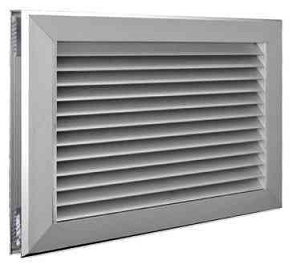
Add mandatory 15-20% safety margin to calculated airflow to compensate for pressure losses on inlet grilles and ensure real-world system efficiency.
Compensating Fresh Air Inlet — The Most Common Design Mistake
The most frequent design flaw in welding workshops is installing exhaust fans without corresponding fresh air intake. A powerful 10,000 m³/h extractor without intake creates negative pressure in the workshop — air enters through cracks, doors, and windows without control, and extraction efficiency drops dramatically.
Golden rule: fresh air intake should equal or slightly exceed exhaust (ratio 0.85-0.95) to maintain controlled slight negative pressure that prevents fume migration to adjacent zones.
Special Requirements — ATEX for Workshops with Explosion Risk
If solvents, paints, primers, or other flammable substances are used near welding posts, ventilation equipment must be ATEX certified (Directive 2014/34/EU, implemented in Romania via Government Decision 245/2016). Same applies if welding containers previously containing flammable substances.
Standard fans are not permitted in ATEX zones — sparks from electric motors or metal rotors can ignite explosive atmospheres. Non-compliance results in fines of €5,000-25,000 and criminal liability in case of incident.
Recommended Equipment from Catalog
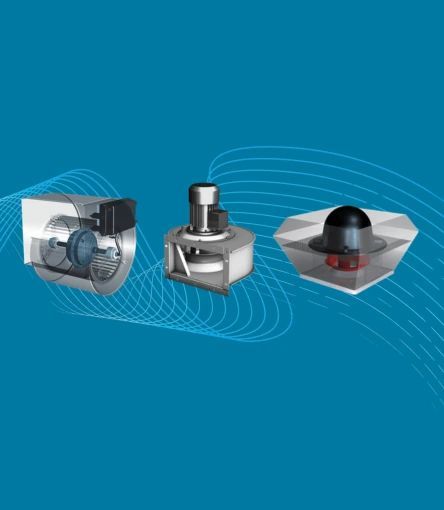
General Ventilation — Industrial Axial Fans
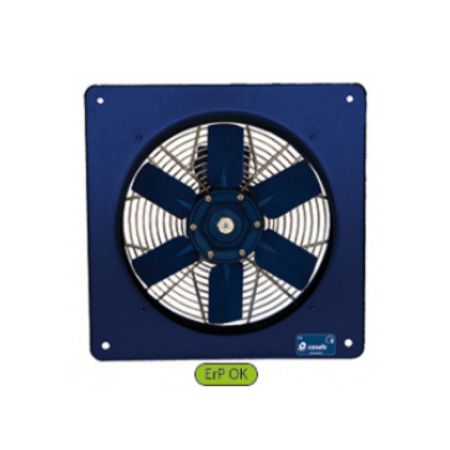
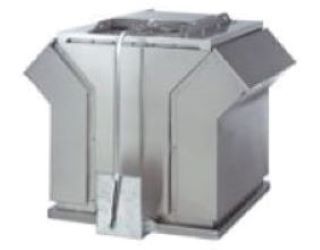
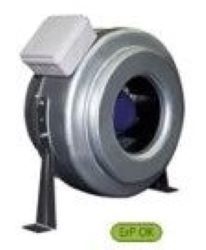
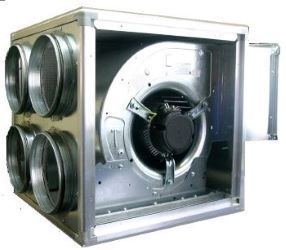
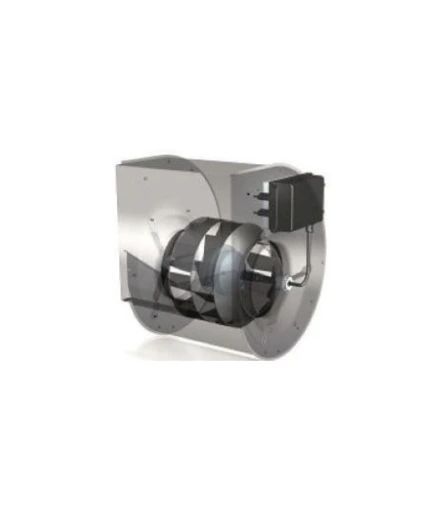
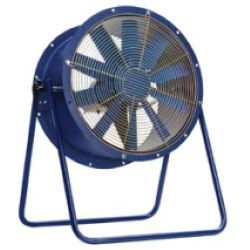
For direct exhaust through workshop wall, Casals industrial axial fan range is standard solution — airflows from 1,260 to 37,660 m³/h, AC or EC motors, wall-mounted:
Local Ventilation — Extraction Systems
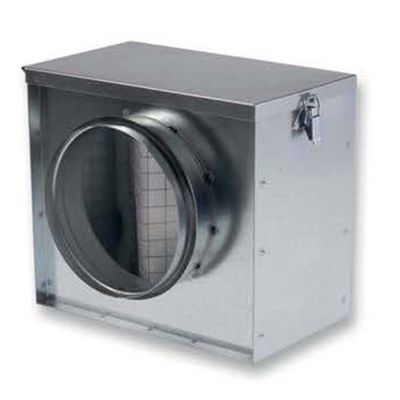
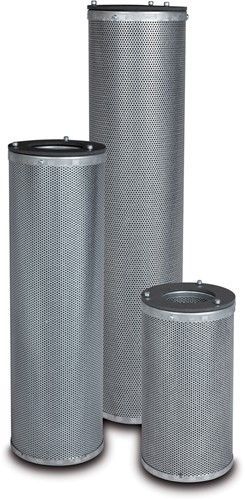
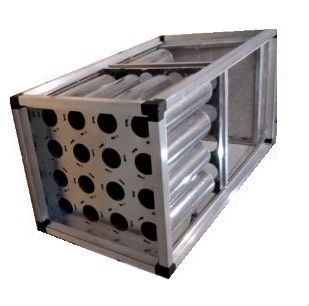
For capturing fume at source before reaching breathing zone:
ATEX Equipment — For Explosion Risk Workshops
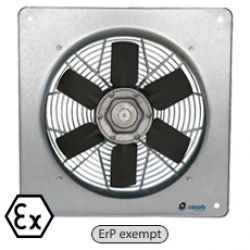
If workshop operates with flammable substances or classified ATEX zones, Ex-certified fans are mandatory:
- Equipment for potential explosive atmosphere (93 products)
- Axial EX fans — side exhaust through walls
- Centrifugal EX fans — high pressure, long ducts
Automation — Sensors & Controllers
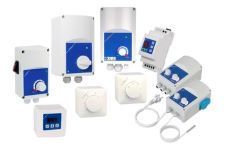
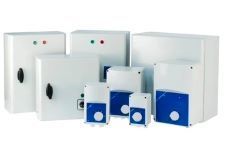
For variable-activity workshops, ventilation automation based on fume concentration reduces energy consumption by 30-50% versus fixed-speed operation:
Risk Assessment: Does Your Workshop Need ATEX?
Answer these 5 questions to determine if ATEX-certified equipment is mandatory:
1. Are flammable substances handled in workshop?
Solvents, paints, primers, thinners, etc.
2. Are objects previously containing flammable substances welded (tanks, pipes, containers)?
3. Are combustible materials (metal dust, paper, textiles) stored near welding posts?
4. Is workshop in same space as chemical lab or paint booth?
5. Has safety inspector classified workshop as Zone 1 or Zone 2 (ATEX classification)?
Result:
If you checked YES on any question: ATEX equipment is MANDATORY. Standard fans are prohibited — explosion risk and fines €5,000-25,000.
If you checked NO on all: Standard equipment sufficient, but general + local ventilation mandatory per Government Decision 1048/2006.
Cost-Benefit Analysis: What Proper Ventilation Saves
| Cost / Benefit | Value/year (€) |
|---|---|
| INITIAL INVESTMENT | -8,000 to -15,000 |
| Equipment + installation | -8,000 to -15,000 |
| ANNUAL SAVINGS (RECURRING) | +5,000 to +8,000 |
| Avoided labor inspection fines (2-3 audits/5 years) | +1,200 |
| Reduced sick leave (3-5 days/year/employee) | +1,800 |
| Increased productivity (12-15% efficiency gain) | +2,500 |
| Personnel retention (avoid turnover) | +800 |
| Annual energy consumption | -1,200 |
| PAYBACK PERIOD | 18-24 months |
Common Mistakes — What to Avoid
- Exhaust without compensating intake — negative pressure, reduced efficiency, doors hard to open
- Incorrectly oriented exhaust — fume passes through welder's breathing zone before capture
- Airflow calculated without margin — pressure losses reduce real airflow by 15-25%
- Standard fans in ATEX zone — explosion risk, legal non-compliance with serious consequences
- Single exhaust on one wall — creates dead zones where fume stagnates; position intake and exhaust on opposite walls
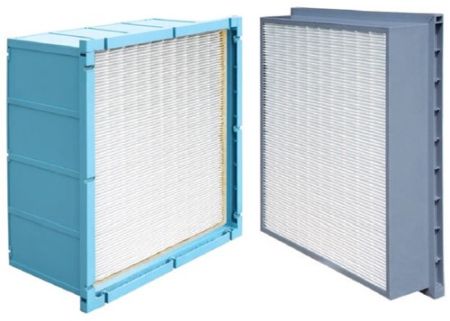
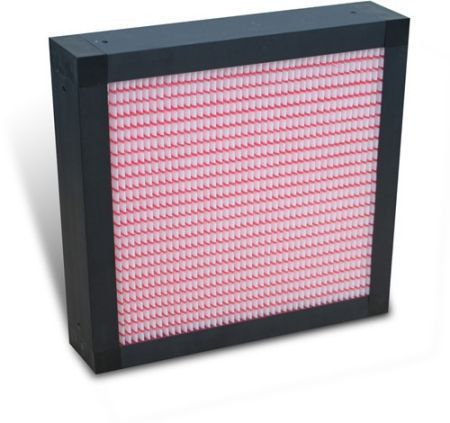
- HEPA filter instead of active ventilation — portable filters complement but cannot replace system ventilation
Frequently Asked Questions
What is hexavalent chromium and why is it dangerous in welding?
Hexavalent chromium (Cr VI) is an oxidized form of chromium appearing in stainless steel welding fume. It is carcinogenic via inhalation and causes lung and kidney damage even at low exposures. Legal limit is only 0.01 mg/m³ — strictest of all welding noxes. Only local ventilation and HEPA filtration systems can maintain sub-limit concentrations.
Why is a portable commercial fan insufficient for welding workshop?
Portable fans (1,000-3,000 m³/h) cannot achieve 30-60 air changes per hour needed for 1,000+ m³ workshops. Example: 20×10×5m workshop at 45 ACH needs 45,000 m³/h airflow — equivalent to 15-45 portable fans running simultaneously, which is impractical and uneconomical. Permanently installed system ventilation is the only legal pathway.
How long does installation of complete ventilation system take?
For medium workshop (20×12m): 1-2 days for general ventilation (holes, fan mounting, intake grille). Total: 2-3 days, no complete shutdown needed if scheduled properly (shift work).
What is the difference between a simple intake grille and one with heat recovery?
Simple intake grille introduces cold air from outside — summer is uncomfortable (drafts at 15°C), winter increases heating cost. Heat recovery grille pre-warms air using evacuated air, reducing thermal losses by 70-80% and improving comfort. Not mandatory, but pays for itself in 2-3 years through reduced energy bill.
What penalties does a workshop face for missing ventilation system?
Per Government Decision 1048/2006: €500-5,000 fine at first violation, €5,000-25,000 if repeated or ATEX zone involved. Plus criminal liability if occupational disease develops. Costs quickly exceed proper system investment.
Conclusion — How to Approach Your Project Correctly
A properly ventilated welding workshop always has two protection layers: local ventilation at each active post (capture at source) and general ventilation at 30-60 ACH to dilute escaping fume and maintain workshop air quality. If ATEX risk exists, all ventilation equipment must be Ex-certified.
A correctly dimensioned system cost is recovered in 2-3 years through reduced medical expenses, avoided fines, and maintained productivity. A welder with chronic respiratory problems works 20-30% slower and generates more defects.
Related Articles & Tools:
- Production hall ventilation — Technical requirements and solutions by industry type
- Required air changes calculator — free online tool
- Ductwork pressure loss calculator
Need a solution for your workshop?
ventilation.ro team can advise on correct equipment selection, airflow calculation, and full regulatory compliance — including ATEX zones. We offer free on-site assessment and documented proposals.
📞 +40 722 667 238 | 📧 ioannina@ioannina.ro | Request technical assessment & quote →


Post comment