













 Solutions KIT
 Sales
Sales













 My account
 View cart
Poultry Farm Ventilation in 2026 — How to Calculate Airflow, Which Equipment to Choose and How to Avoid Costly Mistakes
In a poultry farm, ventilation is not an accessory — it is a production system. A 3°C temperature error reduces broiler feed conversion and weight gain. Ammonia concentration above 20 ppm damages the respiratory tract of birds and increases mortality. Relative humidity above 70% combined with heat effectively stops growth. All these are direct consequences of an incorrectly sized or poorly managed ventilation system.
This guide explains what airflow is required in summer and winter, what gas concentrations must be maintained, how to calculate the number of fans and which equipment is suitable for Romanian poultry houses.
Why ventilation is the most important system in a poultry house
Unlike industrial or commercial buildings where ventilation provides employee comfort, in poultry houses ventilation directly ensures production and animal survival. Large flocks concentrated on small areas generate massive quantities of heat, water vapour and harmful gases that no passive system can evacuate.
What a bird of 1 kg live weight generates per hour:
- Heat: 6 kcal — accumulated across tens of thousands of birds, indoor temperature can rise 10–15°C above outside without active ventilation
- Moisture: 6 g water vapour — the primary source of excessive humidity favouring respiratory disease and litter deterioration
- CO₂: 438–533 cmc/kg/h — affects metabolism and immunity above 3,000 ppm
- NH₃ (ammonia): 45.7–53.3 cmc/kg/h — the most dangerous gas, a powerful respiratory irritant
- H₂S (hydrogen sulphide): 9.53–11.9 cmc/kg/h — toxic at elevated concentrations
Effect of ammonia at various concentrations:
| NH₃ concentration | Effect on birds |
|---|---|
| Below 10 ppm | Optimal — no negative effects |
| 10–20 ppm | Permitted limit (Directive 2007/43/EC) |
| 20–50 ppm | Eye and respiratory irritation, slowed growth |
| 50–100 ppm | Bronchitis, pneumonia, increased mortality |
| Over 100 ppm | Death within hours |
Optimal microclimate parameters
Temperature
Broilers (meat chickens):
| Age | Optimal temperature |
|---|---|
| 0–3 days | 33–34°C |
| 7 days | 30–31°C |
| 14 days | 27–28°C |
| 21 days | 24–25°C |
| 28 days | 21–22°C |
| 35+ days | 18–20°C |
Layers: 18–22°C throughout the production cycle.
Relative humidity
Optimal relative humidity: 60–70%. Above 80% — litter becomes wet, foot pad lesions increase, respiratory infections rise. Below 40% — excessive dust, respiratory irritation.
Air speed
Air speed at bird level must not exceed 0.3 m/s in the cold season. In summer, speed can increase to 1.5–3 m/s in tunnel ventilation systems producing a cooling effect through convection.
Airflow calculation — summer and winter
A poultry house requires completely different airflow rates in summer versus winter — the ratio can be 7:1.
Indicative airflow per head based on live weight:
| Season | Airflow per kg live weight |
|---|---|
| Winter (minimum) | 0.7–1.0 m³/h/kg |
| Spring/autumn | 2.0–3.5 m³/h/kg |
| Summer (maximum) | 5.0–7.0 m³/h/kg |
Calculation example for a broiler house:
House with 20,000 birds × average weight 2.5 kg = 50,000 kg live weight
| Season | Calculation | Total airflow required |
|---|---|---|
| Winter | 50,000 × 1.0 m³/h/kg | 50,000 m³/h |
| Summer | 50,000 × 6.0 m³/h/kg | 300,000 m³/h |
Winter/summer ratio = 1:6 — which is why poultry houses use variable speed fans or staged fan groups.
Recommended equipment
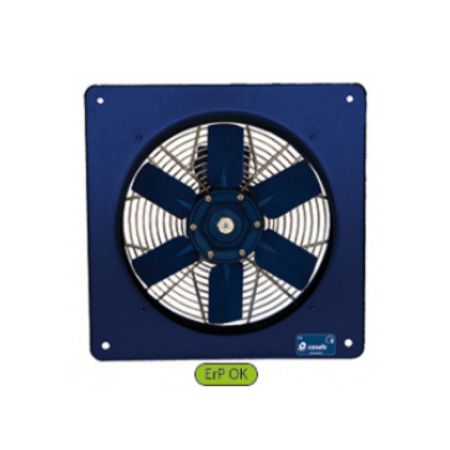
Axial fans with adjustable blade pitch — the standard solution
C4 anti-corrosion finish — resistance to ammonia and hydrogen sulphide corrosion specific to poultry environments. A fan without C4 protection corrodes rapidly.
Adjustable blade pitch — allows airflow optimisation at installation without requiring a different fan model.
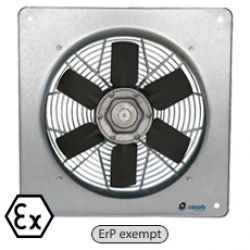
Casals HJBM PLUS range — recommended for poultry houses:
| Model | Power | Approximate airflow | Diameter |
|---|---|---|---|
| HJBM PLUS 30 M4 | 80W | 2,200–5,500 m³/h | 300mm |
| HJBM PLUS 40 M4 | 180W | 5,000–12,000 m³/h | 400mm |
| HJBM PLUS 50 M4 | 370W | 10,000–25,000 m³/h | 500mm |
| HJBM PLUS 63 M4 | 750W | 20,000–50,000 m³/h | 630mm |
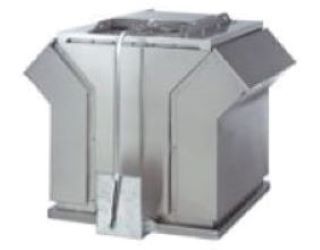
Roof units — additional summer extraction
Roof-mounted units supplement transverse ventilation or operate independently as vertical exhaust. Key advantage: no horizontal draughts at bird level — important for young flocks.
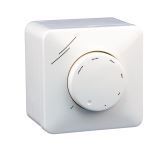
Speed controllers — automatic control
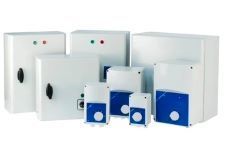
The recommended minimum configuration: thermostat with 2–3 fan start stages, temperature sensor at bird head height, speed controller for minimum winter ventilation.
Common mistakes in poultry house ventilation
Mistake 1 — Sizing for winter, not summer. Always calculate for maximum summer demand at peak flock weight and provide staged start capability for winter.
Mistake 2 — Fans without C4 corrosion protection. Ammonia and hydrogen sulphide rapidly degrade unprotected metal. HJBM PLUS fans with C4 finish pay for themselves within 3–5 years versus premature replacement of standard fans.
Mistake 3 — No variable speed for winter. Fans either at full power or off means either excessive ventilation (high heating costs) or insufficient ventilation (rising NH₃ and humidity). A speed controller enabling 20–30% nominal power in winter is essential.
Mistake 4 — Incorrect fan placement. All fans on one wall creates dead zones. Correct: cross-flow or tunnel ventilation with inlets and outlets on opposite walls.
Mistake 5 — Neglecting maintenance. Blades with dust and grease deposits lose 15–20% airflow. Annual cleaning before summer is mandatory.
Why ventilation.ro for your farm equipment
Direct importer of Casals (Spain) — the HJBM PLUS range is designed for demanding industrial and livestock environments:
- C4 finish standard on all HJBM PLUS models — ammonia and hydrogen sulphide resistance
- Adjustable blade pitch — fine-tune airflow at installation
- IP55 — complete protection against dust and high-pressure water cleaning
- Local stock — 24–48h delivery for urgent needs
- Free consultancy — tell us your house dimensions and flock size and we calculate the complete system
📞 +40 722 667 238 💬 WhatsApp — send the house plan and we respond with a complete recommendation
👉 HJBM PLUS axial fans C4 👉 Roof units 👉 Speed controllers
Frequently asked questions
What is the maximum permitted ammonia concentration in a poultry house? EU Directive 2007/43/EC requires a maximum NH₃ concentration of 20 ppm, measured at bird head height. Exceeding this value damages the respiratory tract, increases mortality and reduces production yield.
How many fans are needed for a 1,000 m² house? It depends on the flock and bird weight. As a base rule: in summer at maximum airflow (6 m³/h per kg), a house with 20,000 broilers of 2.5 kg requires 300,000 m³/h. With 50,000 m³/h fans — 6 active fans are required. Contact us with farm details for an exact calculation.
Can standard industrial building fans be used for a poultry farm? Yes, if they have C4 anti-corrosion finish and IP55 protection. Fans without C4 protection degrade rapidly in the ammonia and hydrogen sulphide-rich environment of poultry houses.
Is mechanical ventilation mandatory or can it be natural? Natural ventilation works only for small houses and low-density flocks, or for transitional spring/autumn periods. In summer in high-density broiler houses (33 kg/m²), mechanical ventilation is not optional — it is the only method to maintain temperature and gas concentrations within permitted limits.
Related articles: Industrial hall ventilation guide · Summer in industrial buildings · EC vs AC motors — energy efficiency


Post comment