








 Solutions KIT
 Sales
Sales











 My account
 View cart
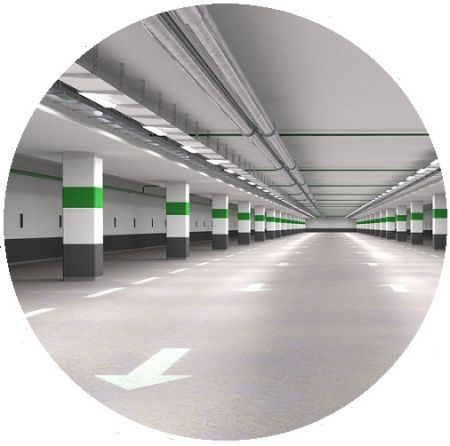
Underground Car Park Ventilation — Regulations, CO Airflow, Jet Fans and Electric Vehicles
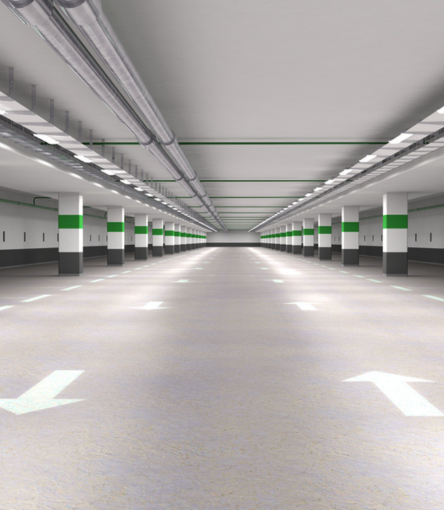
Every residential complex, shopping centre or office building constructed in Romania includes one or more underground car parks. Designers know that ventilation is mandatory — but the exact regulations, correct airflow rates and the choice between jet fans and ductwork are rarely explained clearly. This technical guide covers everything that matters in 2026, including the most urgent new subject: requirements for car parks with electric vehicle charging.
Why underground car parks cannot function without mechanical ventilation
An underground car park is an enclosed space with no effective natural air movement. Carbon monoxide (CO) from exhaust gases is invisible, odourless and accumulates rapidly. In a 100-space car park with heavy morning activity, CO concentration can exceed 50 ppm within 10–15 minutes without an active ventilation system. The safe limit for continuous exposure is 30 ppm — at 200 ppm, acute poisoning symptoms develop in under an hour.
Mechanical ventilation is not optional. It is mandatory under current regulations and a condition for fire authority approval.
Applicable regulations in 2026
The regulatory framework for underground car parks in Romania has evolved significantly over the past three years. Projects submitted for approval in 2026 must comply simultaneously with:
NP 24-2022 — the car parks design standard, updating and partially replacing NP 127:2009. This is the primary document. Compared to NP 127:2009, it introduces specific requirements for electric vehicles, updates car park classification and more clearly aligns normal ventilation with smoke extraction.
I5-2022 — the ventilation and air conditioning installation standard, in force from March 2023. Defines airflow calculation methodology and general design requirements.
P118/1-2025 — the fire safety standard, in force from May 2025. Requires EN 12101-3 certifications for fans in the fire scenario and updates smoke extraction requirements. NP 127:2009 remains partially in force for fire safety aspects not yet fully replaced — the designer must correlate both documents.
Airflow requirements — correct calculation
Normal ventilation — CO control
The minimum airflow for CO dilution is 6 air changes per hour:
Q (m³/h) = Floor area (m²) × clear height (m) × 6
Example for an 800 m² car park with 2.4 m clear height:
- Volume: 800 × 2.4 = 1,920 m³
- Minimum airflow: 1,920 × 6 = 11,520 m³/h
CO sensors regulate operation: minimum ventilation (2 ACH) in quiet overnight periods, progressive activation at 50 ppm and maximum airflow at 75–100 ppm. Sensors are mounted at 0.5 m from floor level — CO, being heavier than air, accumulates near the floor.
👉 CO and multiparameter sensors for car parks
Smoke extraction — fire scenario
The airflow for smoke evacuation in the fire scenario is 10 air changes per hour or per the specific smoke calculation. Fans in the fire scenario must be certified F300/2h or F400/2h to EN 12101-3, verified by an independent notified body.
The common and costly mistake: using standard ventilation fans in the smoke extraction circuit. These units do not have the required thermal certification and invalidate the entire fire authority documentation. In an actual fire, the system may fail within minutes.
👉 F300/F400 certified smoke extraction fans for car parks
Jet fan vs. ductwork — choosing the right solution
Ductwork system
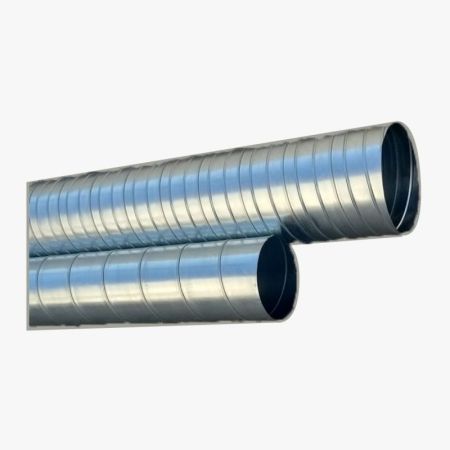
Metal ducts transport air from fans in a separate plant room to distribution points throughout the car park.
Advantages: lower noise level in the car park itself, precise airflow distribution control. Disadvantages: ductwork occupies 300–500 mm of ceiling clearance, higher installation cost, separate plant room required. Suited for: car parks under 500 m² per level or with clear height below 2.2 m.
Jet fan system (impulse fans)
Jet fans are axial fans mounted directly on the ceiling, without ductwork. Through the induction effect, the high-velocity air jet entrains a volume 6–10 times greater of ambient air, creating a directed flow towards perimeter extraction fans.
Advantages: significantly lower installation cost (no duct network), maximum ceiling clearance maintained, superior energy efficiency — fans operate proportionally to detected CO concentration. Disadvantages: higher noise level in the car park compared to ductwork, CFD study required for complex geometries. Suited for: car parks over 500 m² per level — becomes more economical and more efficient than ductwork at this size.
F300-certified jet fans can serve both normal ventilation (CO) and smoke extraction (fire) — eliminating two separate systems and significantly reducing total installation cost.
👉 Products for underground car parks — jet fans and smoke extraction
Electric vehicles in underground car parks — new requirements in 2026
The number of electric vehicles registered in Romania is growing rapidly. Li-Ion battery thermal runaway presents safety challenges that classic ventilation systems do not fully address.
Why Li-Ion batteries are different from a conventional vehicle fire
A conventional vehicle fire produces CO, CO₂ and hydrocarbons — standard smoke extraction systems are dimensioned for these.
A Li-Ion battery thermal runaway additionally produces hydrogen fluoride (HF) — extremely toxic, lethal at 30 ppm in short exposure — and can reach temperatures above 800°C compared to ~500°C for a conventional vehicle fire. Standard CO detectors do not detect HF. Thermal propagation between modules makes the fire harder to extinguish and longer-lasting.
What NP 24-2022 requires for EV zones
- Separation from the rest of the car park: EI 60 walls or minimum clear distances between EV spaces and the rest
- Thermal sensors at charging stations with overload protection
- Additional gas detection beyond standard CO: temperature sensors with early warning capability, detecting abnormal temperature rise before flames appear
- Ventilation airflow in the EV zone may require increase above the standard calculation
Practical recommendation: any car park with more than 10 dedicated EV spaces or DC Fast Charging stations (≥50 kW) should be evaluated specifically. Early coordination with the project verifier and local fire authority is essential.
👉 Multiparameter CO + temperature sensors for EV zones
CFD study — when it is required
CFD simulation verifies numerically that the system achieves the required air distribution and smoke evacuation. Required in practice by ISU/IGSU for:
- Car parks with more than 2 basement levels
- Geometries with dense structural obstacles (columns at 5–6 m, internal ramps)
- Areas exceeding 10,000 m²
- Any atypical configuration where analytical calculation cannot demonstrate compliance
A valid CFD study includes a minimum of 3 simulated scenarios: normal operation at maximum airflow, reduced overnight regime and the fire scenario with the seat of fire at the most unfavourable point.
Documentation checklist — ISU approval for underground car parks
- CO airflow calculation — normal operation (min. 6 ACH)
- Smoke extraction airflow calculation (min. 10 ACH or specific smoke calculation)
- Technical data sheets with F300/F400 EN 12101-3 certificate including notified body number
- Electrical diagram for UPS/generator supply to emergency fans
- CO sensor positioning at h = 0.5 m, setpoints 50 ppm alarm / 75–100 ppm maximum ventilation
- NP 24-2022 evaluation for EV charging zones
- CFD study if geometry requires or fire authority requests
- Correlation with P118/1-2025 for smoke extraction scenario
Why choose ventilation.ro for your car park project
As direct importer of Casals and Nicotra Gebhardt in Romania, ventilation.ro supplies:
- F300/F400 certified jet fans and smoke extraction fans with complete EN 12101-3 notified body documentation — everything needed for the fire authority file, ready to use in the project
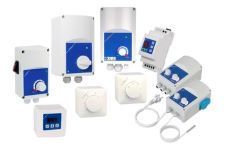
- CO and multiparameter sensors for automatic control and early detection in EV zones
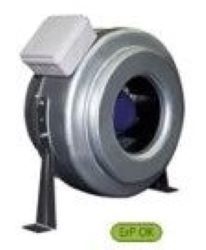
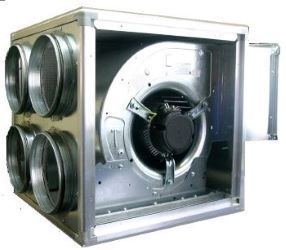
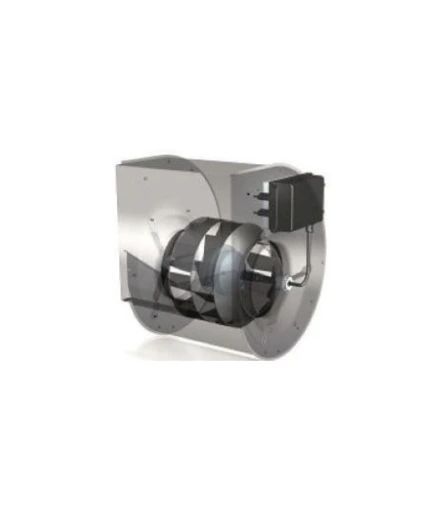
- Axial and centrifugal fans for ductwork systems
- Complete technical documentation — original manufacturer data sheets, performance curves, CE declarations
- Free technical consultancy for system sizing and equipment selection
- Formal quotations for tenders with complete specifications and fixed timescales
📞 +40 722 667 238 — free consultancy for your car park project
🌐 Products for underground car parks 🌐 Airflow calculator
Related articles: P118/1-2025 standard — what changes for smoke extraction · F300/F400 certified smoke extraction fans · Airflow calculator


Post comment